
Whitetail Deer
Species guide · Deer
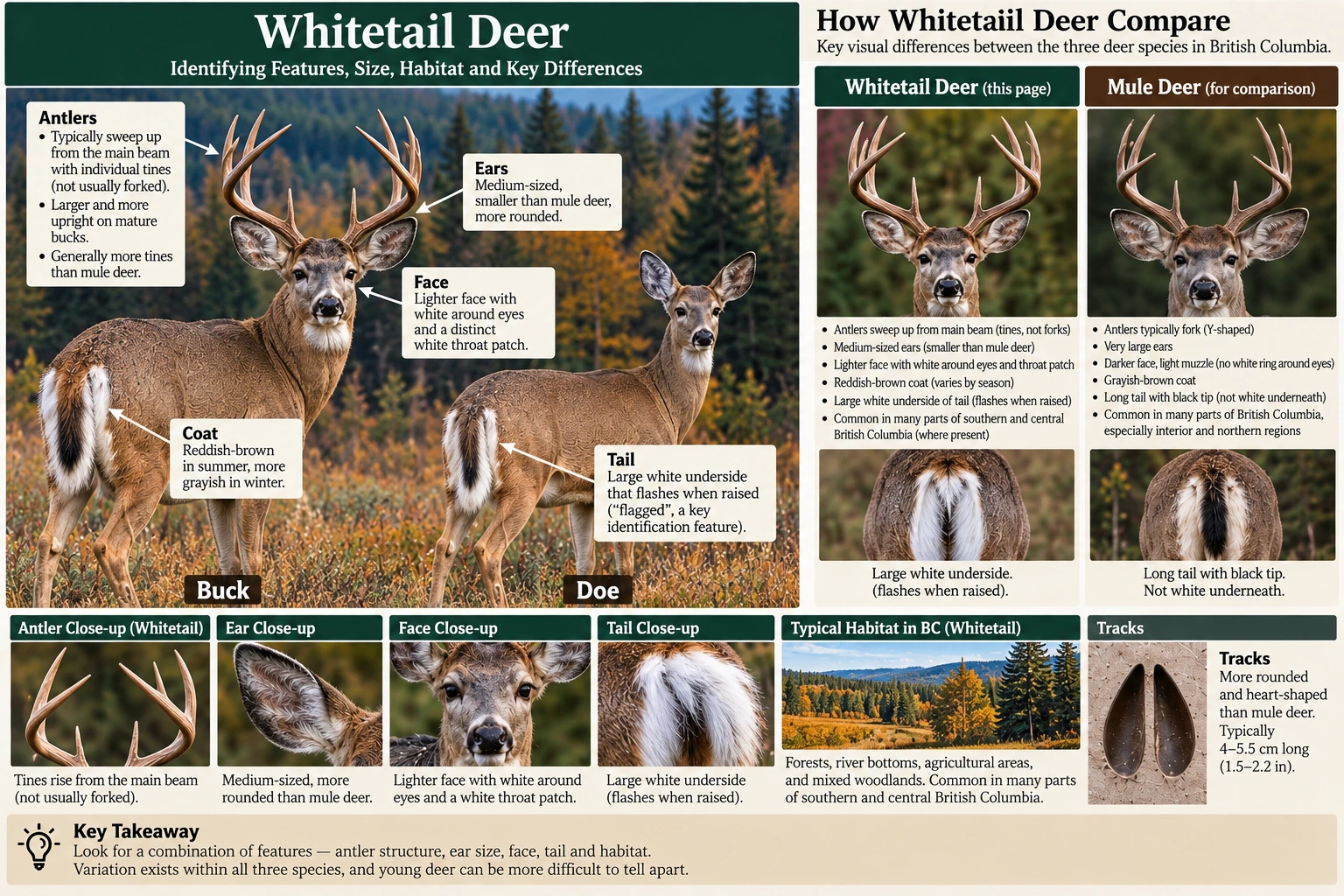 Open full-size image ↗
Know the animal and habitat
Whitetails use an enormous range of habitats, from agricultural edges and hardwood forests to brush and mixed cover. Their use of food, security cover and travel corridors changes with season, weather and hunting pressure.
Identification comes first
Learn the local deer species and the legal animal definition for the season. Do not let a quick glimpse of antlers substitute for complete identification where other deer overlap.
How the habitat changes the hunt
Close cover can make encounters sudden. Plan safe shooting lanes, pay attention to property boundaries and think about where a deer can disappear after the shot. In more open country, visibility can tempt a hunter to stretch distance; improve the position rather than letting the landscape set your range.
Before the shot
Use a stable position and a clear path to the vital area. Brush, movement and poor angle can make a short shot worse than a longer clear one. Stay inside the range you have demonstrated in practice. Ammunition choice should begin with the exact rifle cartridge and a manufacturer-documented hunting application for deer or comparable medium game. Traditional soft-point, bonded and monolithic-copper hunting bullets can all be legitimate designs when the particular load is intended for the application; construction changes the balance of expansion, penetration and weight retention, so bullet weight alone is not the selection rule. Confirm the chosen load in your own rifle before relying on it in the field.
Recovery and use
Mark the last location carefully. Dense cover can hide a deer quickly. Once recovered, move deliberately into tagging, field processing, cooling and meaningful meat use.
Continue learning
This site is free — brand partnerships coming soon.
General educational information only. Always follow current local hunting regulations and verify ammunition performance with the manufacturer.