
Hunting Ammunition 101
Hunting ammunition makes more sense when you stop looking for one magic number. A complete load combines a cartridge, a particular bullet design and published performance information, all of which still have to work in your rifle and hunting context.
 Open full-size image ↗
Learn the parts of the round
A centerfire cartridge normally brings together the case, primer, propellant and bullet. The cartridge designation identifies the ammunition family; the bullet is the projectile and can vary substantially within that cartridge.
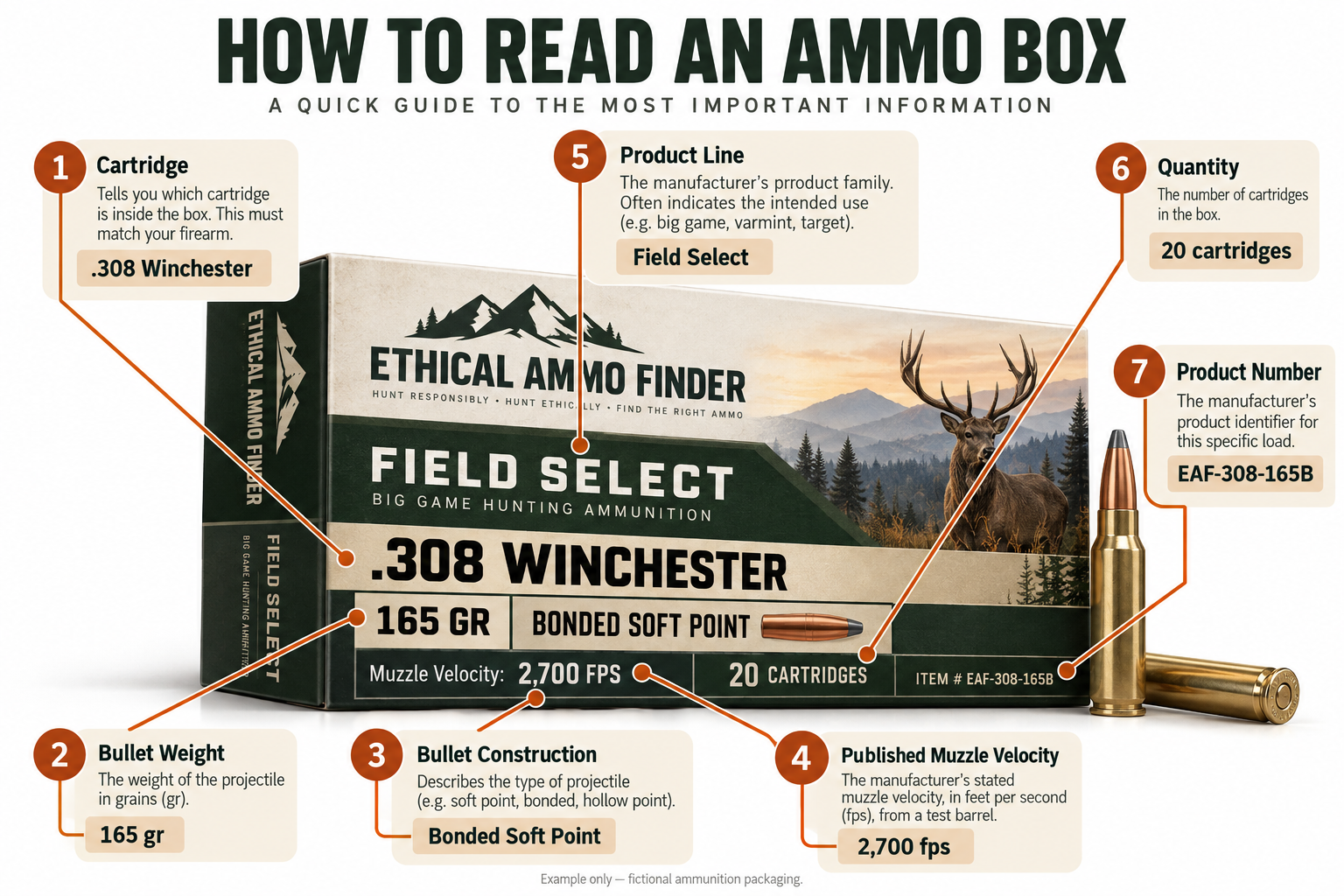
How to read an ammunition box
 Open full-size image ↗
Text version of this diagram
- Cartridge: .308 Winchester.
- Bullet weight: 165 grains.
- Bullet construction: bonded soft point.
- Published muzzle velocity: 2,700 feet per second.
- Product line: Field Select.
- Quantity: 20 cartridges.
- Product number: EAF-308-165B.
The packaging is fictional and illustrates where information may appear; confirm the exact load and firearm compatibility with the manufacturer.
Read the package deliberately rather than treating the largest number as the answer. First confirm the exact cartridge designation matches the firearm. Then identify bullet weight in grains, bullet construction or product name, the manufacturer’s stated application, published muzzle velocity, product line, quantity and the product or item number. The item number is especially useful when two boxes look nearly identical but contain different loads. Published muzzle velocity comes from stated test conditions and may not equal velocity from your rifle. A useful box-reading habit is: cartridge → bullet weight → construction → intended application → published performance → exact product identity.
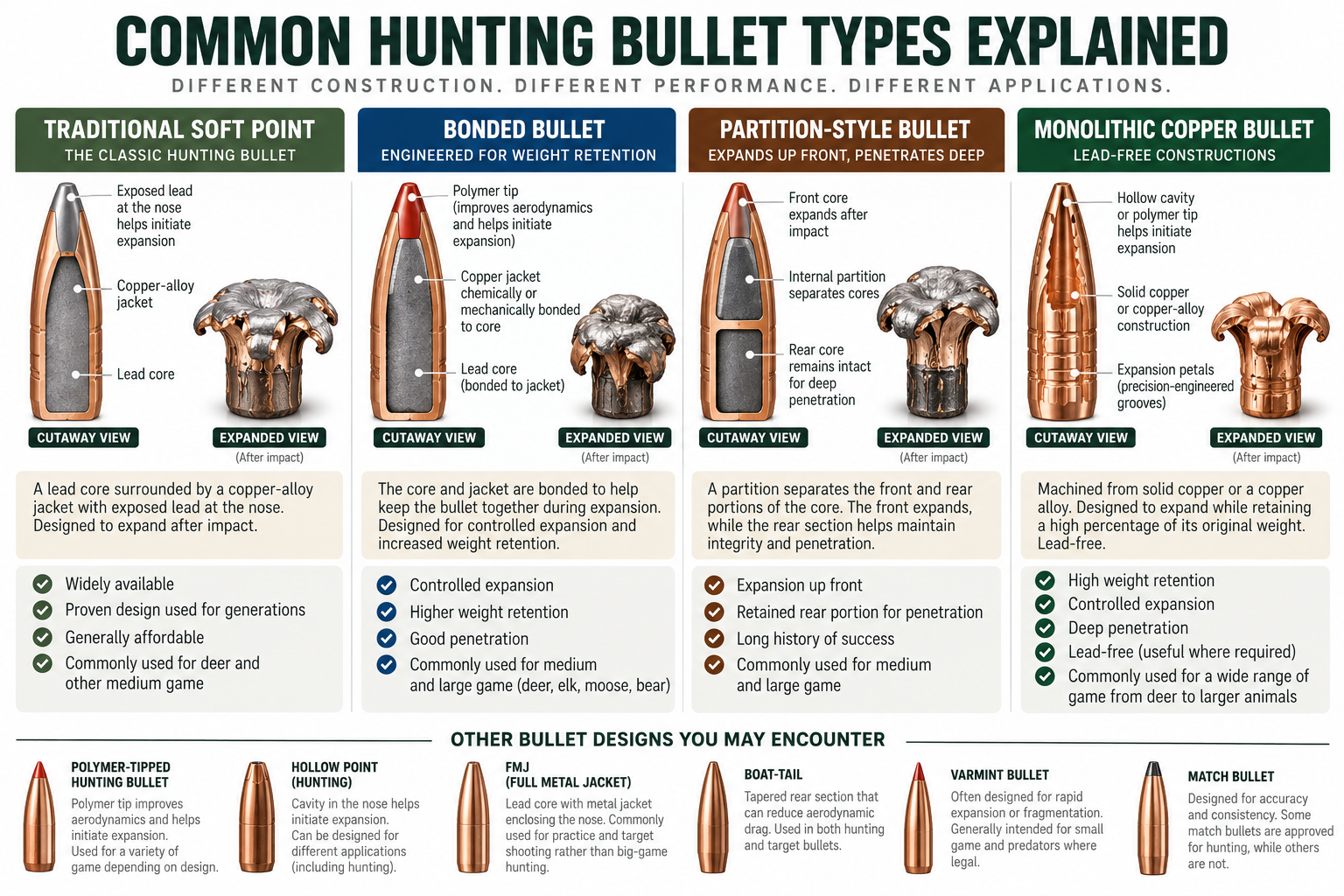
Hunting bullets are purpose-built
Manufacturers design bullets with different balances of expansion, penetration and weight retention. A target bullet and hunting bullet may share a diameter or weight without sharing an intended job.
Do not confuse muzzle energy with suitability
Energy is a useful physical quantity, but it cannot tell you by itself how a bullet will expand, penetrate or whether the manufacturer designed it for the animal in question.
Trajectory does not make the decision
A flatter trajectory can reduce some range-estimation sensitivity, but it does not expand your demonstrated shooting ability or guarantee useful terminal performance.
Start simple
For a new hunter, the best learning sequence is exact cartridge → documented hunting application → appropriate bullet construction → reliable accuracy in the rifle → understanding downrange behavior. Comparisons become more useful after those foundations are clear.
This site is free — brand partnerships coming soon.
General educational information only. Always follow current local hunting regulations and verify ammunition performance with the manufacturer.