
Field Processing
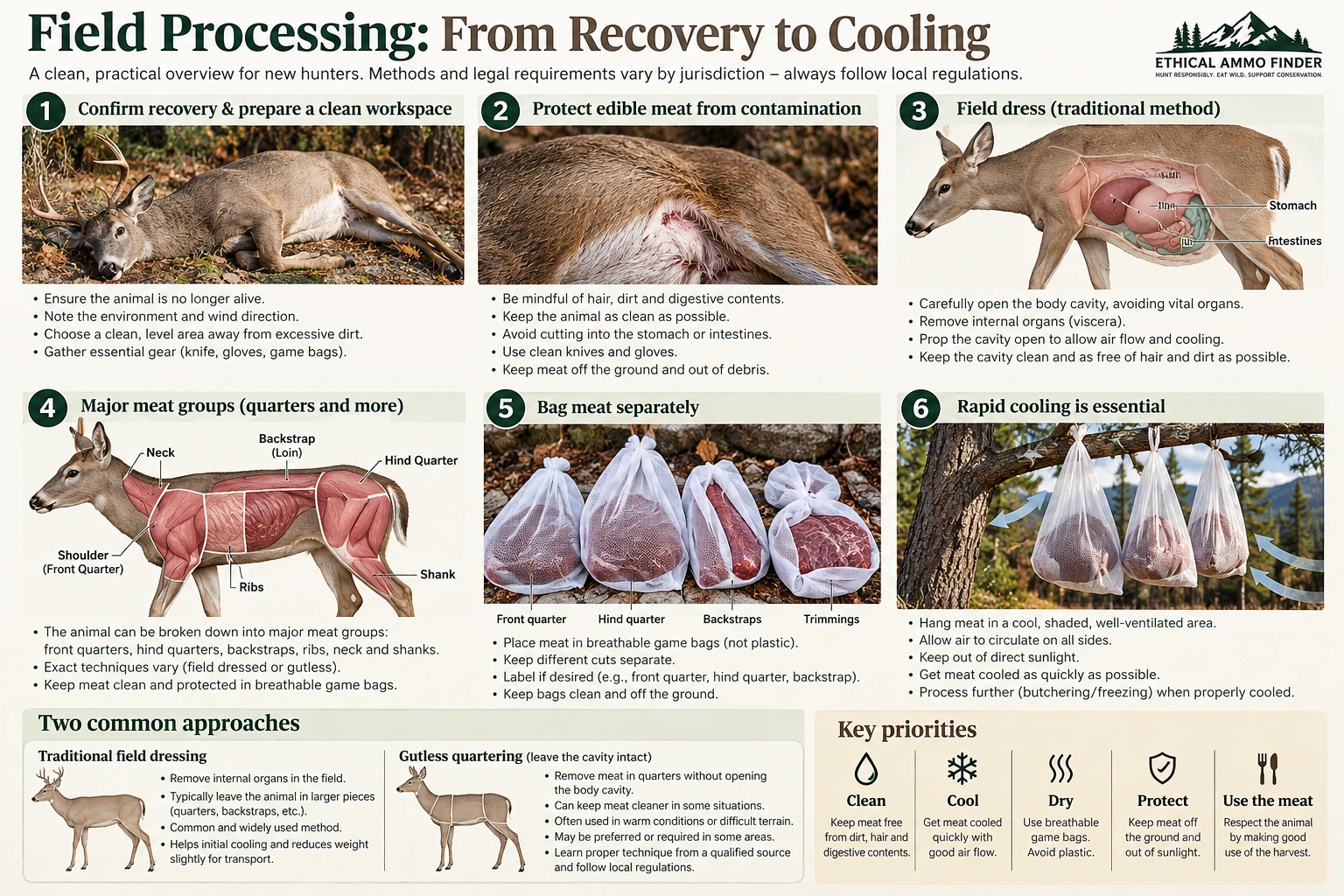
Field processing is the first stage of turning a recovered animal into food. The priorities are legality, cleanliness, heat removal and a method that fits the animal, terrain and conditions.
 Open full-size image ↗
Begin only after recovery is complete
Approach and handle a recovered animal safely and complete any immediate tagging or validation required where you hunt. Know those obligations before cutting or moving anything.
Choose a method for the situation
Whole-animal field dressing, quartering and other lawful methods each have advantages. Animal size, distance, temperature, terrain and local evidence requirements can change the best approach.
Field dressing: understand the purpose before the cuts
The goal is to open access for heat removal and remove internal organs without contaminating edible meat. Work deliberately with the cutting edge controlled and directed away from your supporting hand and body. Avoid puncturing the digestive or urinary tract; if contamination occurs, isolate and trim affected material rather than spreading it.
Quartering: plan pieces around cooling and transport
On larger animals, separating the major quarters and other edible meat into manageable protected pieces can speed cooling and make a pack-out possible. Learn the anatomy before the hunt, use clean breathable protection and preserve any legally required evidence of species or sex. Where a gutless method is lawful and appropriate, it can provide access to quarters and other meat without first opening the body cavity, but it is still a food-handling process rather than a shortcut around meat recovery.
Protect edible meat from contamination
Use clean tools and hands where practical, keep digestive contents, dirt, hair and debris away from exposed meat, and separate damaged or contaminated areas rather than spreading contamination.
Remove heat deliberately
Large muscle masses hold heat. Opening the body cavity or breaking a large animal into manageable pieces can accelerate cooling when appropriate. Warm weather makes time increasingly important.
Preserve required evidence
Some jurisdictions require proof of sex, species identification, tags or particular portions to remain naturally attached during transport. Processing convenience never overrides those rules.
Think ahead to the pack-out
Cut and package pieces you can actually move safely. A processing plan that creates loads too heavy for the terrain simply transfers the problem to the next stage.
Field processing is food handling
Treat the harvest with the same seriousness you would give valuable food. Clean work, prompt cooling and thoughtful transport honour the animal more than rushing simply to leave the field.
This site is free — brand partnerships coming soon.
General educational information only. Always follow current local hunting regulations and verify ammunition performance with the manufacturer.