Tap a bullet type to see how it works, its strengths and weaknesses, and what game it suits best.
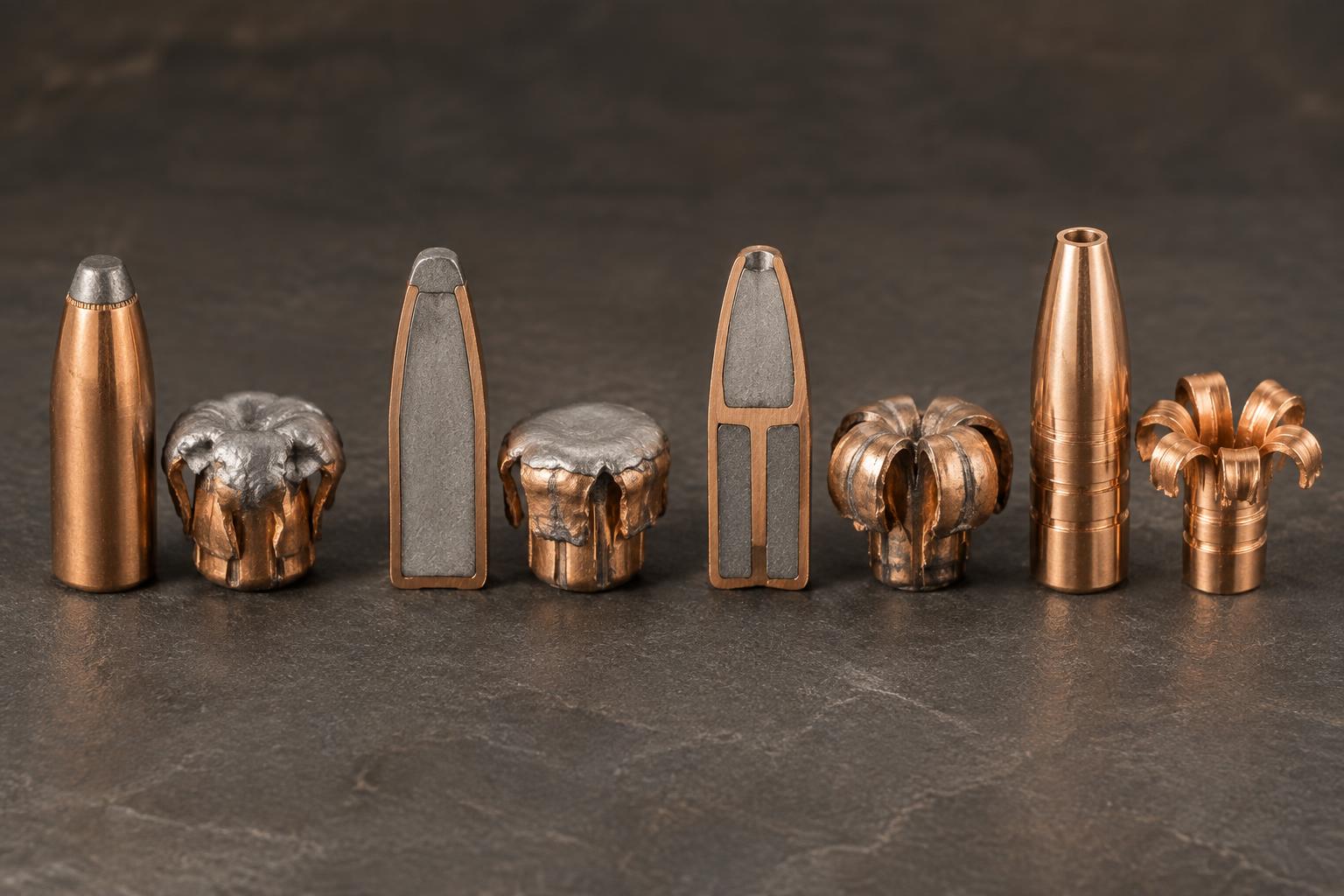
Representative construction and expansion shapes after controlled test-media recovery. Actual results vary with impact speed, resistance, and bullet design.From left to right:(1) Cup-and-core soft point — intact bullet and its expanded form; (2) Bonded core — cutaway showing the bonded lead core, and its expanded form; (3) Partition — cutaway revealing the front and rear lead cores divided by the copper wall, and its expanded form; (4) Monolithic all-copper — intact hollow-point bullet and its four-petal expanded form.
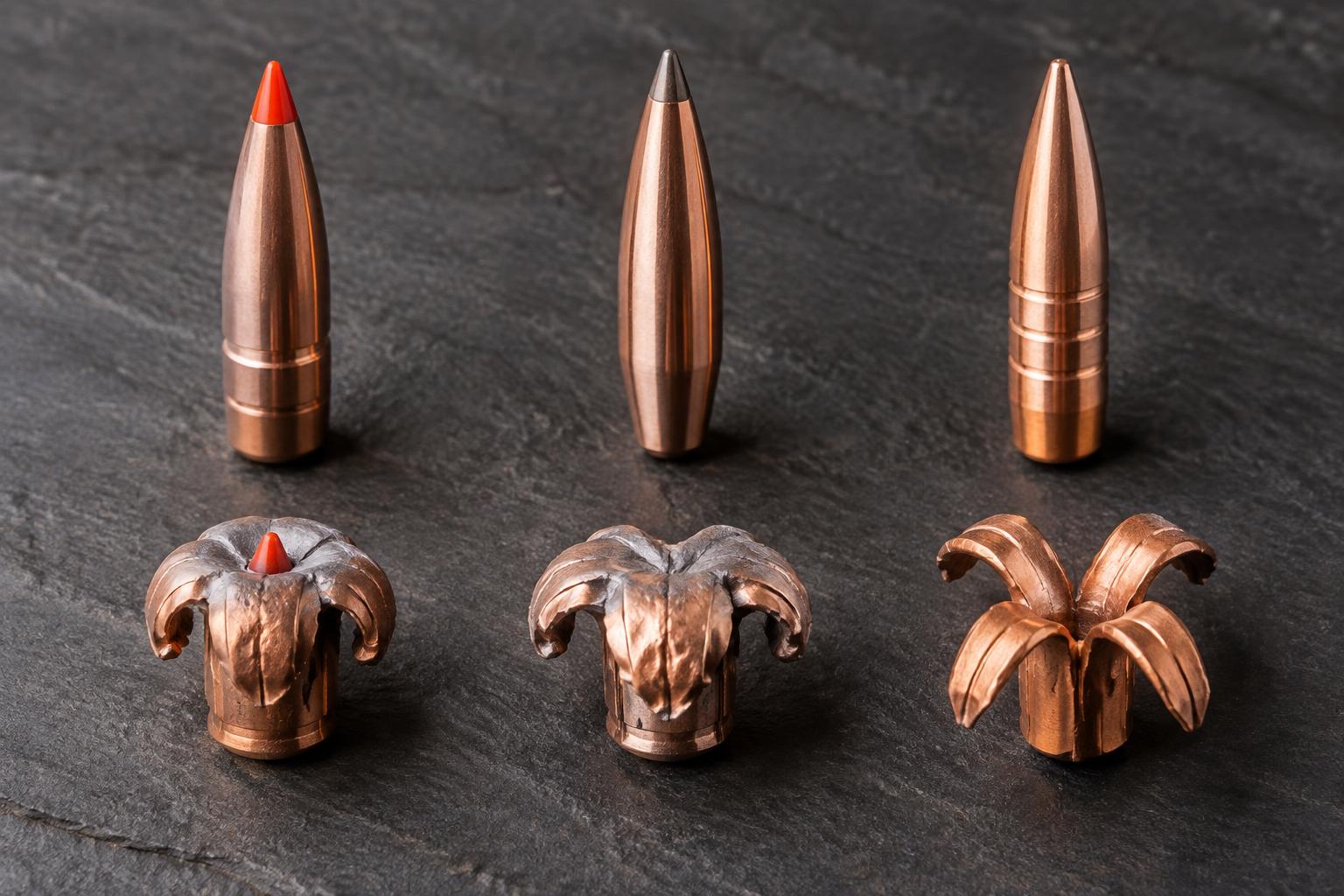
Modern tipped and copper designs can produce very different expanded profiles. The recovered diameter, petal shape, and retained weight help explain penetration and tissue disruption.From left to right:(1) Polymer-tipped — intact bullet with its plastic tip and its expanded form (tip retained); (2) Hybrid match-style hunting bullet with a heat-resistant tip — intact and its expanded form; (3) Monolithic all-copper — intact grooved bullet and its petal-expanded form.