
Seasonal Behaviour
General observation guidance for noticing how a place changes through the year.
Seasonal change is visible in many small details: buds and flowers, changing leaves, ripening seeds and cones, frost, snow, mist, water levels, daylight, and birds moving through. The four-panel plate offers examples, not a calendar or a complete picture of every habitat. It is an AI-generated illustration, not a set of documentary photographs.
When you are outside, note the date and place along with elevation, weather, plants, water, visible birds, and tracks or sign. Comparing observations from repeat visits can show how a particular place changes. A single observation does not tell you where an animal will be, whether it is migrating, or whether the rut has begun. Timing varies among species and places; wildlife agencies also report that the timing of plant and bird life-cycle events has shifted in many species over time.
For species-specific behaviour, use current wildlife-agency information for your region. Check the current regulations separately: a biological season is not the same as a legal hunting season.
General observation guidance only; this page is not region-specific wildlife advice. Source: U.S. Geological Survey — When Timing Is Everything: Migratory Bird Phenology in a Changing Climate ↗
Changing habitat and conditions
Seasonal changes in vegetation, new growth, berries, snow, temperature, water availability and disturbance can affect where and when animals feed, rest or travel. Drought can reduce available water and change the quality or distribution of forage, so animals may use different habitat than you expect in a typical year. Treat these as factors to observe, not dependable predictions: effects vary by species, place, elevation, weather and year. Read current conditions and sign without assuming a familiar-looking habitat still holds the same animals.
A natural-history season is not a legal season. Open seasons change by jurisdiction, management unit, species, sex or age class, weapon, licence and special restrictions; see Regulations for a narrowly labelled, dated example and official sources. Pair these observations with Reading Wildlife Sign.
Further sources: ADF&G deer seasonal cycle ↗ · USGS ungulates and climate assessment ↗ · B.C. approved ungulate winter ranges ↗
← All Species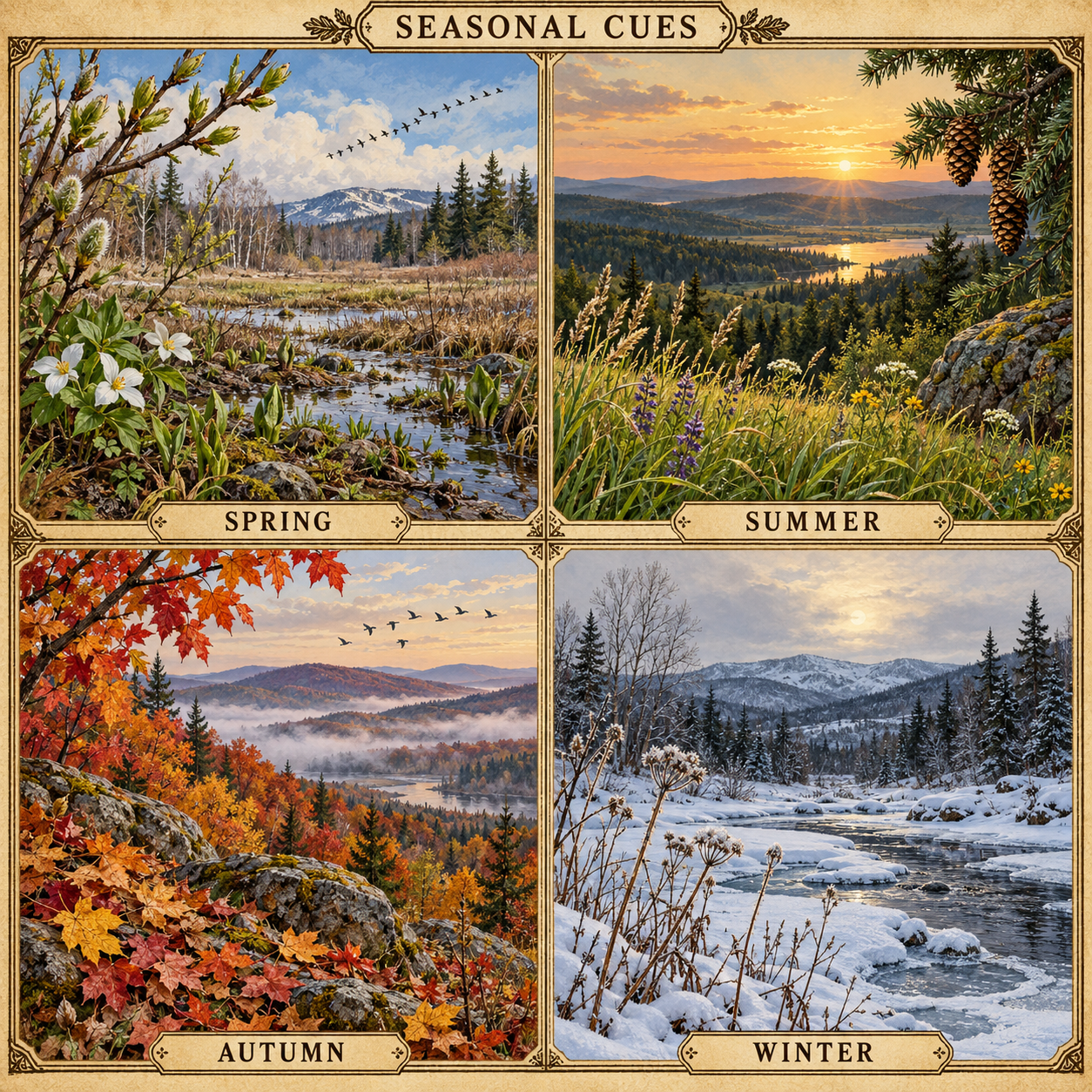
This site is free — brand partnerships coming soon.
Sources & Further Reading · General educational information only. Always follow current local hunting regulations and verify ammunition performance with the manufacturer.