
Reading Wildlife Sign: Tracks, Scat & Predator Awareness
Wildlife sign offers clues about what animals may have passed through an area. A track or dropping is not proof of a species, its current presence, or the animal’s behaviour. Use several clues together, keep a margin of uncertainty, and never approach an animal, carcass, den, or fresh sign just to improve an identification.
Field Skills · Read the land and find game
Read the whole trackway, not one print
Start with the setting. Look for several clear prints in a sequence, then note the shape, length and width, distance between steps, direction of travel, substrate, slope, and nearby habitat. A single print is easy to distort or misread. Soft mud, deep snow, crust, gravel, hard ground, rain, thaw, and wind can stretch, erase, or blur impressions. Gait, speed, load, and uneven ground also change the pattern.
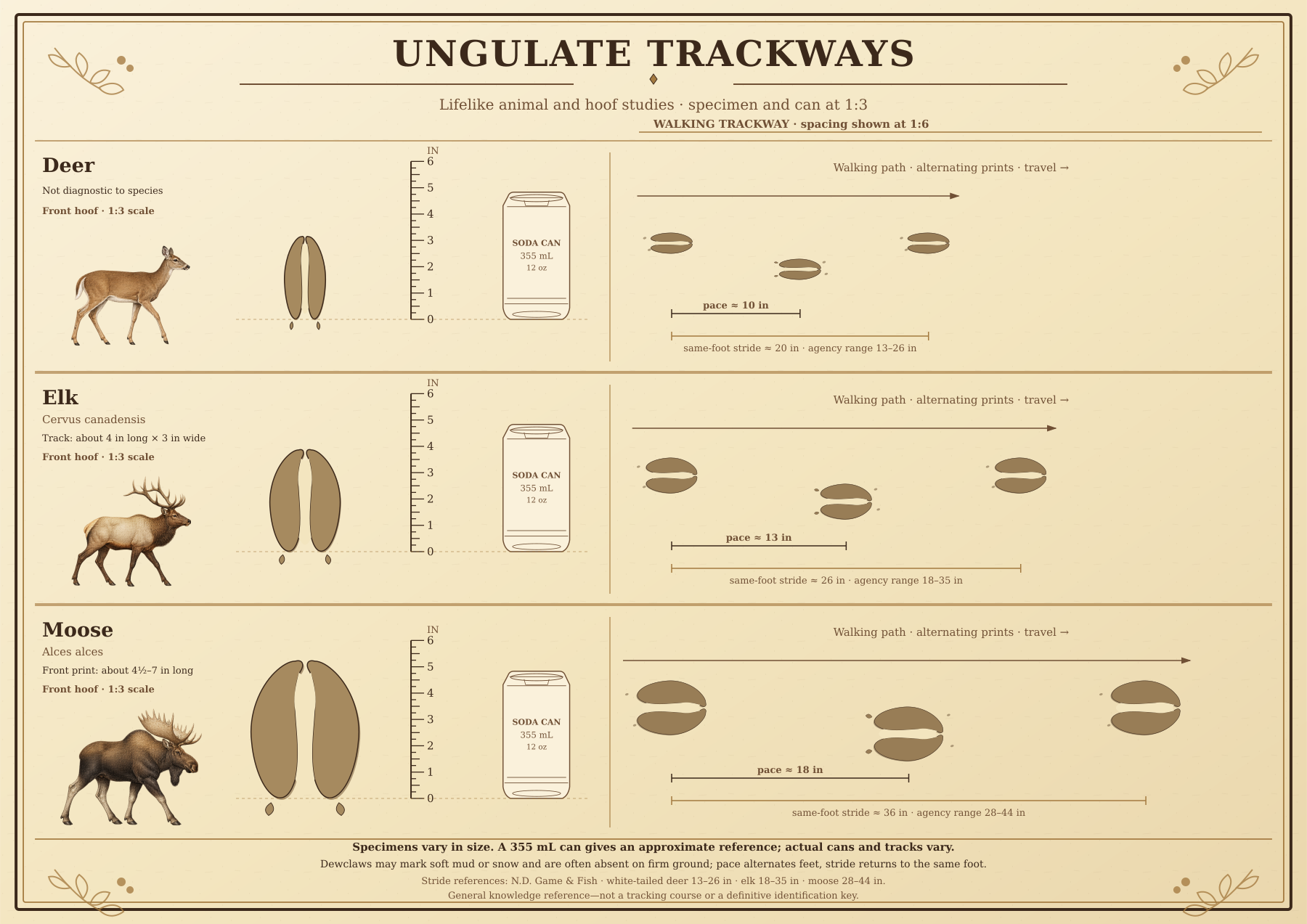
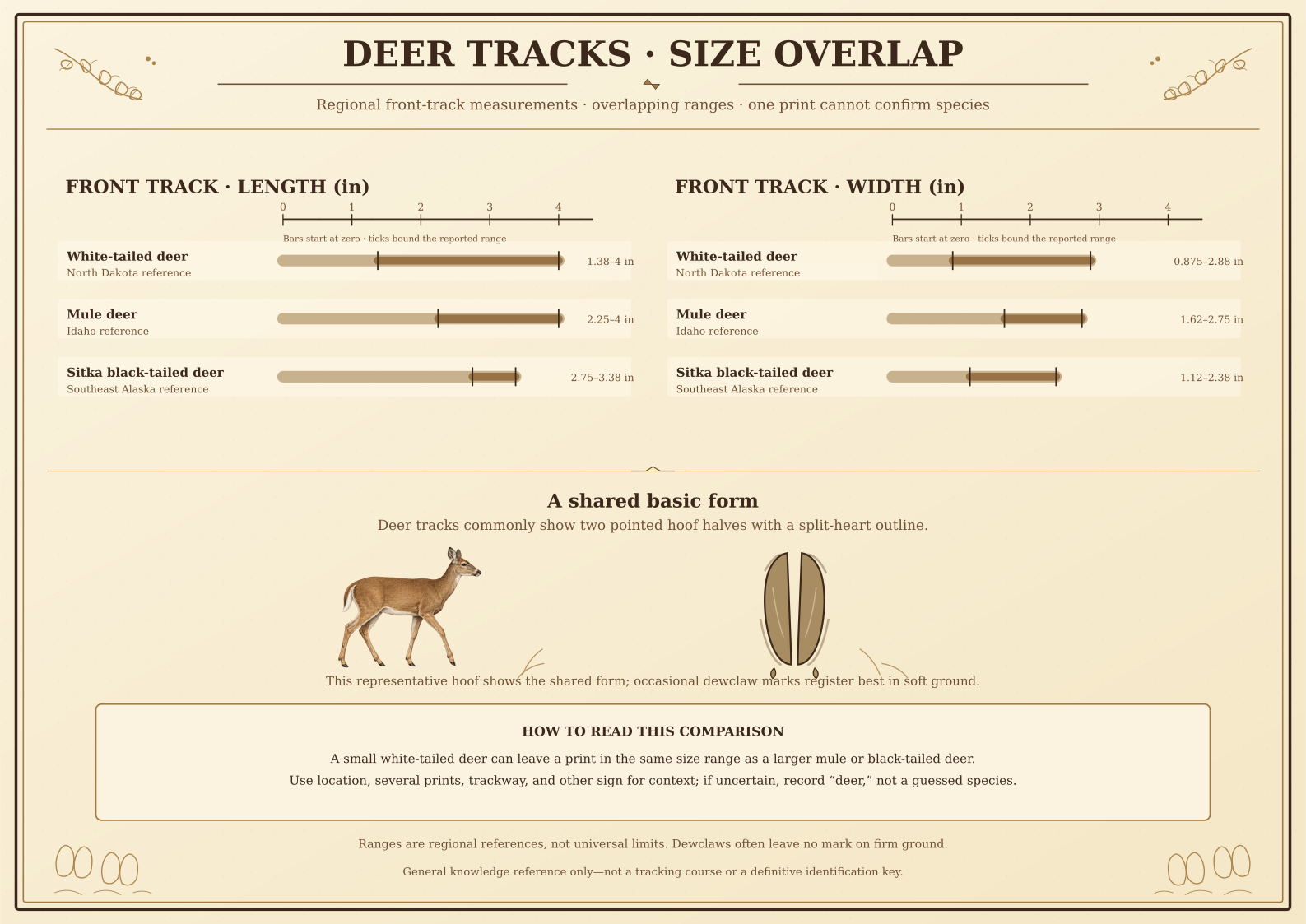
Deer, elk, and moose are all hoofed members of the deer family, and their impressions share basic cloven-hoof features. Track size can help when measured, but it changes with age, sex, foot, ground, and movement. Use a ruler or another reference of known dimensions beside a clear print, and keep the photograph as square to the ground as practical.
“Deer” is not one track type across North America. White-tailed deer, mule deer, and black-tailed deer occupy different regions, and elk are also regionally different. Treat any chart as a regional example rather than a specimen that represents every population. For scouting habitat, rubs and scrapes, see Scouting, Tracks & Sign.
Small-game trackways
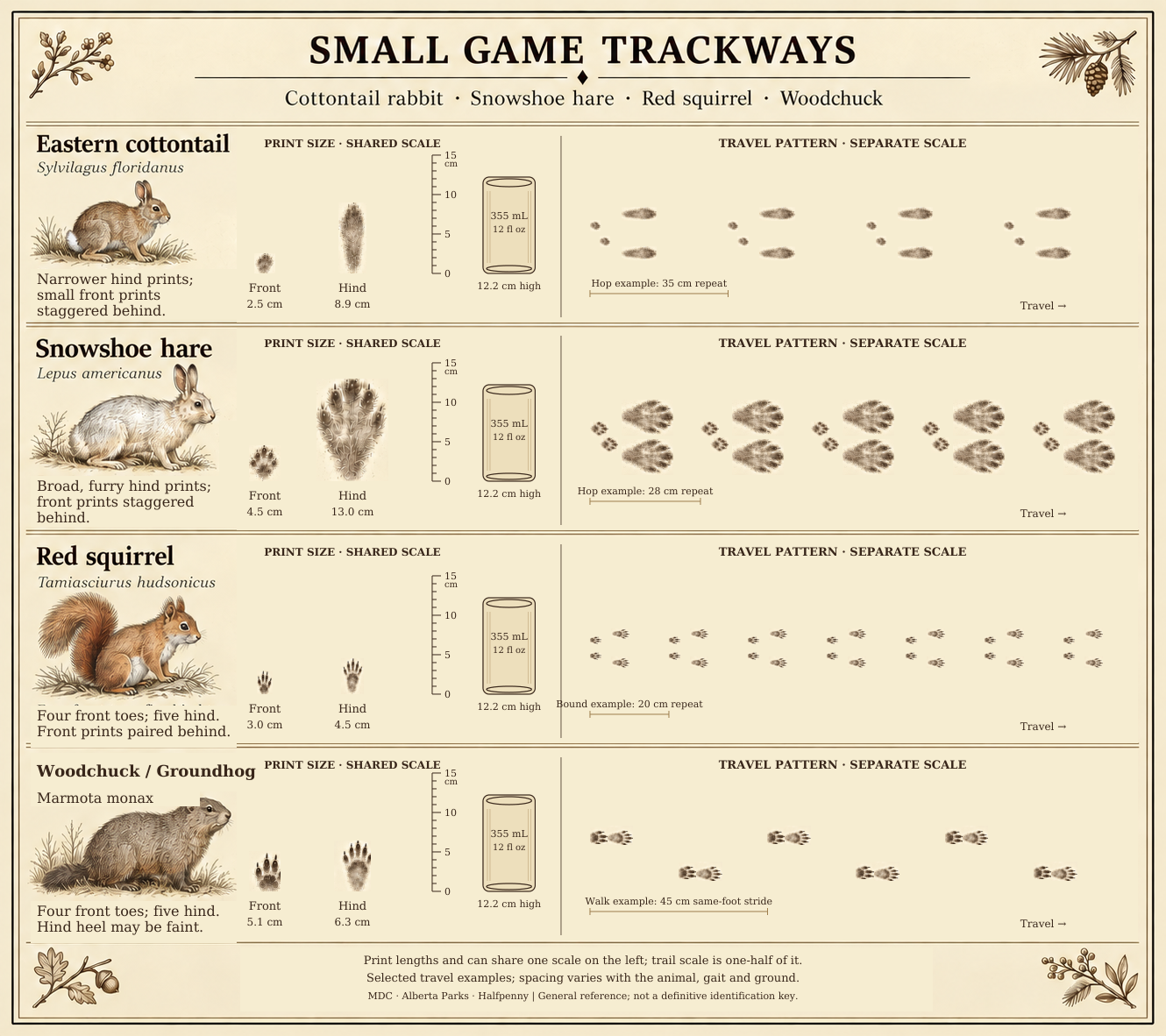
Snow depth, gait, speed, and distortion can make rabbit, hare and squirrel trackways hard to read. Leave uncertain tracks labelled “possible” or “unidentified mammal” rather than forcing a species name.
Large carnivore tracks: a safety-awareness plate
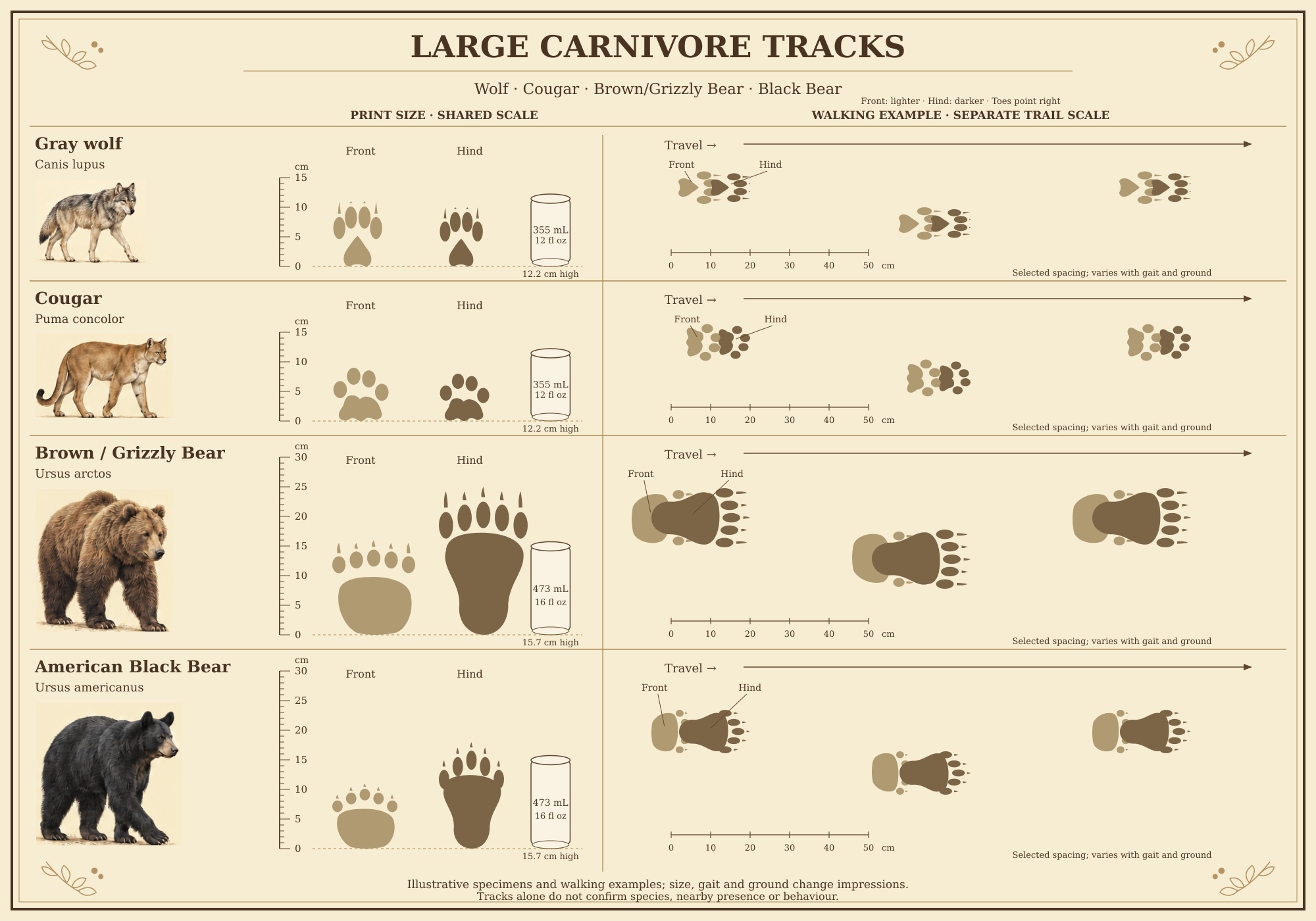
These tracks are included to help hunters recognize signs of animals that can pose a safety concern: wolves, cougars, brown/grizzly bears and black bears. Finding possible tracks should prompt extra caution and closer attention to your surroundings. It does not mean an animal is nearby or behaving aggressively. Do not follow the tracks to find the animal; use the local wildlife authority’s safety guidance for your destination.
- Cat-family prints often lack visible claw marks, while canine prints commonly show them, but substrate and print quality can hide or create apparent details.
- Wolf, coyote, fox, and domestic-dog tracks can overlap; size by itself does not settle the identification.
- A track or trackway is not proof an animal is nearby now, and it does not establish the animal’s intent.
Smaller carnivores can leave confusingly large prints
Not every cat- or dog-like track belongs to a cougar or wolf. Bobcats, coyotes and foxes generally leave smaller prints, but Canada lynx have unusually large, furred feet and can leave impressions that overlap cougar sizes. These examples from the National Park Service’s Washington Cascades guide are front-track dimensions, rounded for comparison; they are regional examples rather than identification cutoffs.
| Animal | Front-print length | Front-print width | Useful context |
|---|---|---|---|
| Canada lynx | About 6.8–11.4 cm / 2⅝–4½ in | About 7–11.4 cm / 2¾–4½ in | Large furred feet; unclear snow impressions can overlap cougar sizes. |
| Bobcat | About 3.8–5.7 cm / 1½–2¼ in | About 4.1–6 cm / 1⅝–2⅜ in | Usually smaller than cougar; toes can spread in deep snow. |
| Coyote | About 5.4–7.9 cm / 2⅛–3⅛ in | About 4.1–6.4 cm / 1⅝–2½ in | Generally smaller than wolf; compare several prints and the trail. |
| Red fox — Cascade example | About 4.8–6.4 cm / 1⅞–2½ in | About 3.8–6 cm / 1½–2⅜ in | This furred-foot regional example overlaps coyote sizes. Other fox populations vary. |
These animals are mentioned for context, not to encourage hunting them. Snow, thaw, splayed toes and overlapping front/hind impressions can exaggerate apparent size, and domestic dogs can leave large canine tracks. Size alone cannot identify the animal or establish that an area is safe. Source: NPS Carnivore Tracking in Washington’s National Parks ↗, printed pages 6–7 and 14–15; imperial endpoints converted directly to centimetres and rounded.
Cougar and other predator awareness
Cougars are also called mountain lions or pumas in different regions. Before a trip, check the current wildlife agency or park guidance for local cougar and other large-carnivore safety, trail advisories, closures, reporting contacts, and recommended equipment. Stay alert, keep children close, keep pets under control as local guidance directs, and never approach, follow, feed, or corner a carnivore. If fresh large-carnivore sign, a carcass, or an official warning is encountered, leave the area and follow the local authority’s advice.
Encounter instructions vary by species, behaviour, park, and situation. For bear encounters and bear spray, use Outdoor Wildlife Safety and current regional instructions. If a person is in immediate danger or injured, contact local emergency services or park dispatch as soon as possible.
Droppings are variable sign
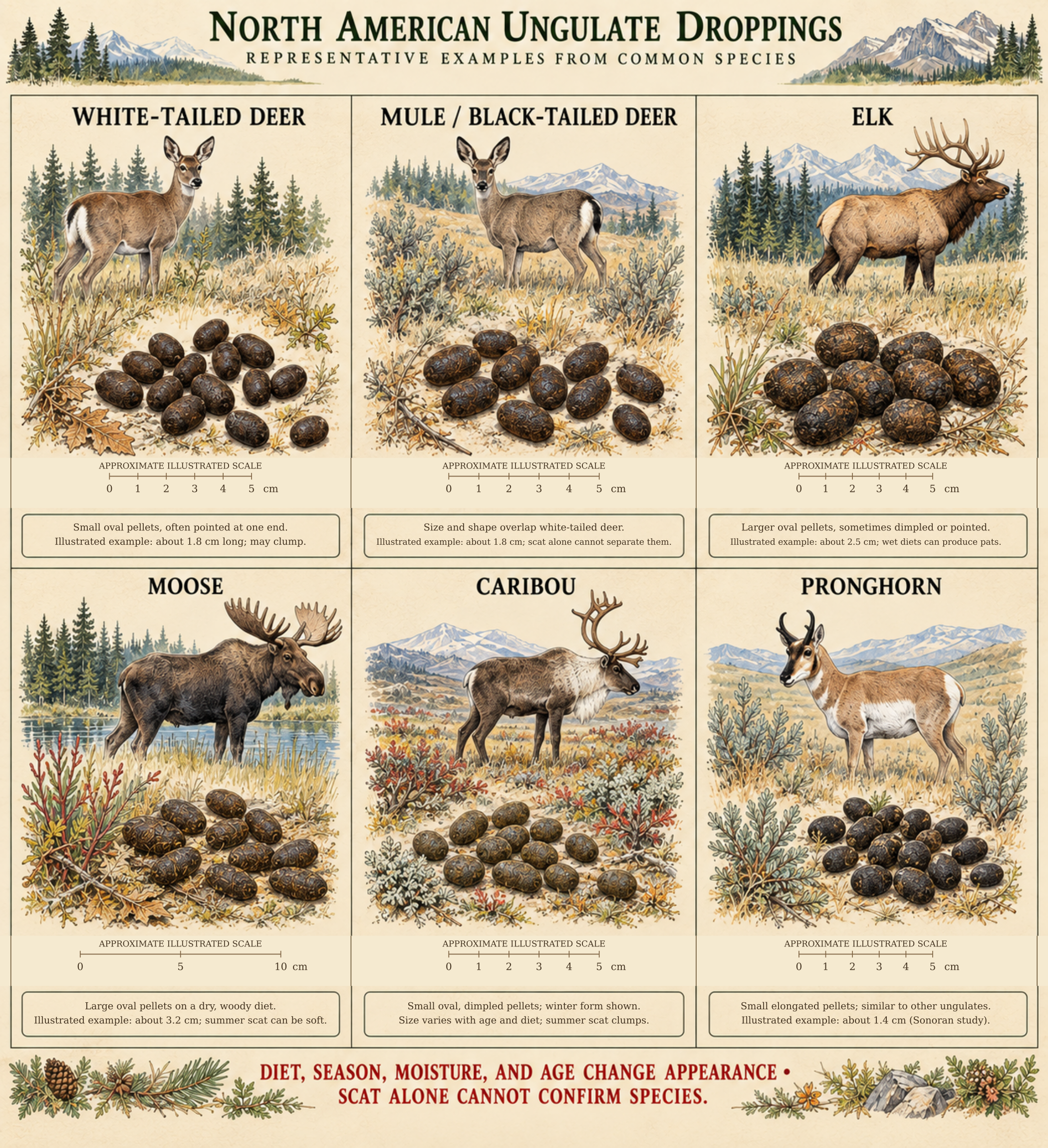
Droppings can help show that animals use an area, but their appearance changes with diet, season, water intake, age, and time exposed to weather. Pellet shape, size, clumping, and moisture can overlap among species. Observe from a distance and leave the sign undisturbed; do not handle, collect, or bring droppings into camp. Colour changes quickly after deposition and with lighting, substrate, and weather.
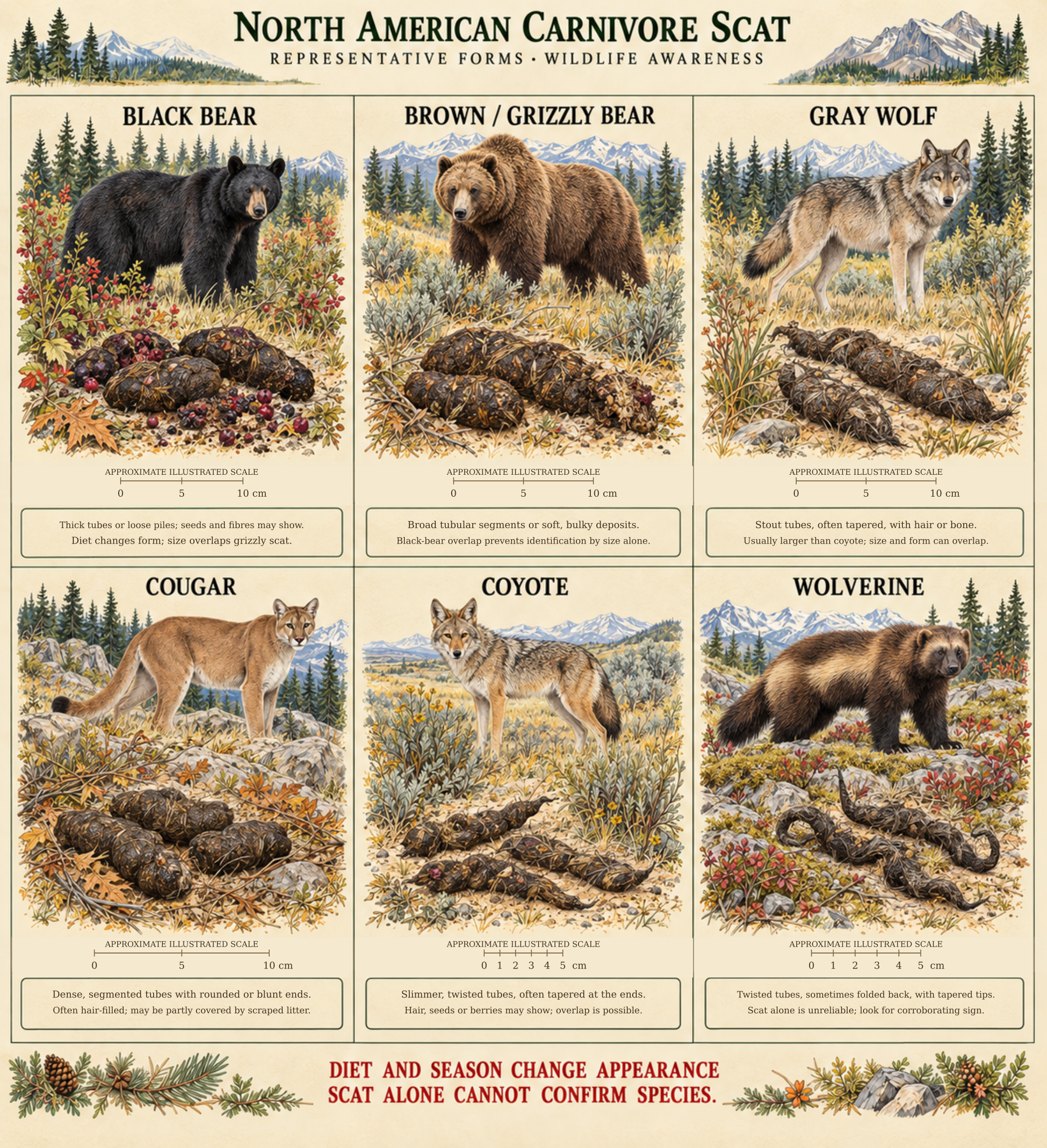
Carnivore droppings: a safety-awareness plate
These droppings are included for wildlife and safety awareness while hunting and travelling in the bush. Recognizing possible bear, cougar or other carnivore sign can help you pay closer attention to your surroundings. The animals shown differ in behaviour and risk; this plate does not imply they are equally dangerous. Scat alone cannot establish which animal made it, whether it is nearby, or whether the area is safe. Do not follow sign to approach an animal or feeding site. Observe without touching, keep pets away from scat, and follow local wildlife guidance.
Bear sign and species awareness
Bear scat is not always a firm tube. Berry-rich diets can produce large wet blobs or loose piles, sometimes purple or red, with seeds and berry remains visible. Colour and consistency vary with food and moisture; these features do not reliably distinguish black bear from grizzly.
Bear tracks, scat, overturned material, hair, and feeding sign can signal bear activity, but they do not reliably show how close a bear is now, where it went, or whether it is likely to be defensive. Do not follow a trackway toward a bear or fresh food source.
Black bears and brown bears (including grizzlies) vary in colour and size, and their ranges can overlap. Coat colour alone is not a reliable way to distinguish them. Body shape, shoulder profile, face shape, ears, and claw appearance are difficult to judge at distance, in poor light, or from a partial view. Do not approach or delay leaving a safe area to identify a bear more closely. See the Black Bear species guide for hunting identification context.
Sources for this lesson (10)
- U.S. National Park Service: Guess the Animal Track ↗
- U.S. National Park Service: Carnivore Tracking guide ↗
- Parks Canada: Pacific Rim wildlife ecology ↗
- Parks Canada: Backcountry travel ↗
- U.S. National Park Service: Moose tracking and identification ↗
- British Columbia: Wildlife roadkill identification guides ↗
- U.S. National Park Service: Bear identification ↗
- U.S. National Park Service: Staying safe around bears ↗
- Parks Canada: Safe travel in bear country ↗
- Parks Canada: If you encounter a bear ↗
See every cited website in Sources & Further Reading. Listing an organization does not imply its endorsement of this guide.
This site is free — brand partnerships coming soon.
Sources & Further Reading · General educational information only. Always follow current local hunting regulations and verify ammunition performance with the manufacturer.