
Mule Deer
Species guide · Deer
 Open full-size image ↗
Know the animal and habitat
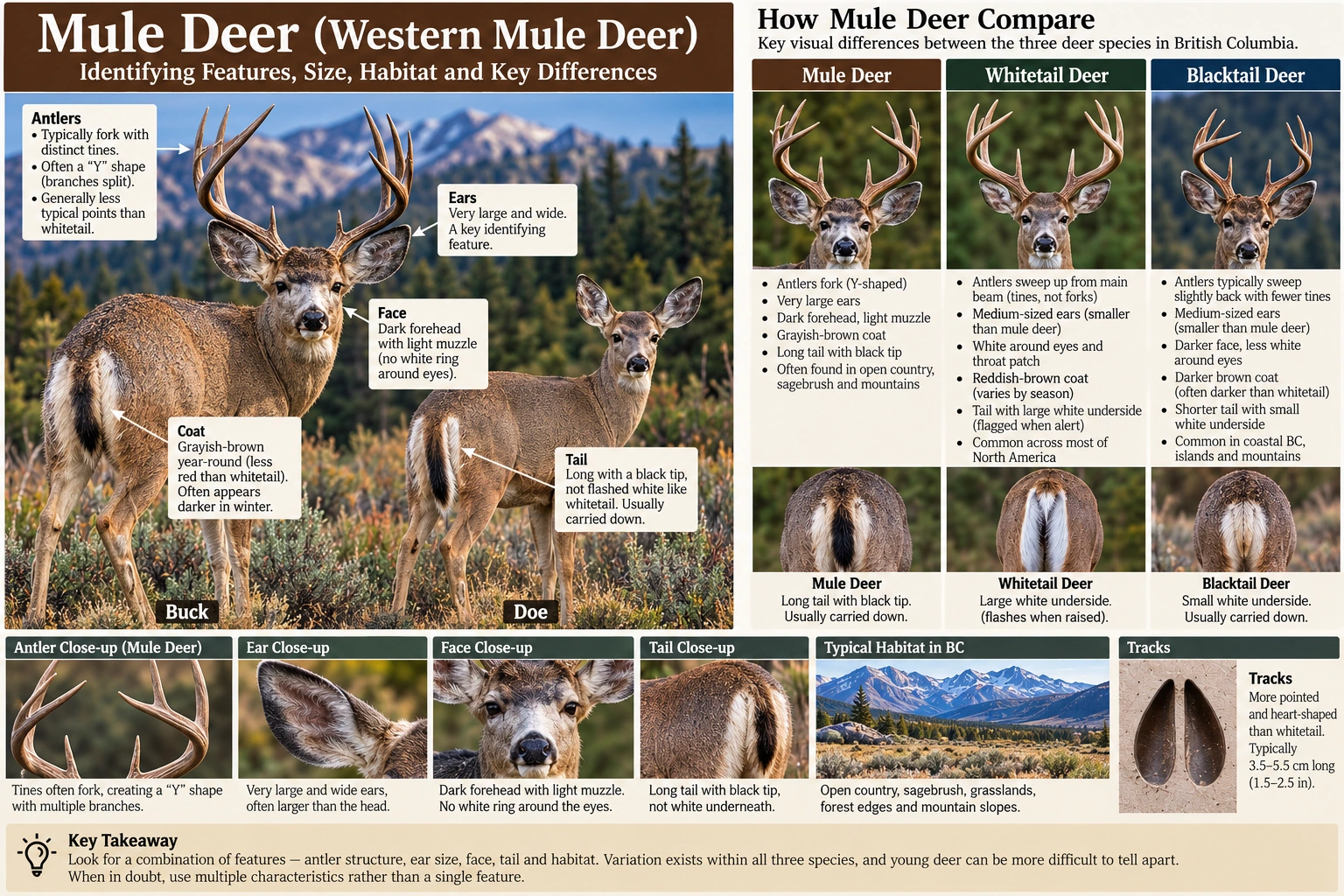
Mule deer are strongly associated with western landscapes including sage, broken foothills, mountains and open country. Seasonal movement and elevation can change where animals are found.
Identification comes first
Distinguish mule deer from other deer where ranges overlap and verify the current legal animal definition. Identification should be complete before distance or trophy characteristics enter the decision.
How the habitat changes the hunt
Open terrain can make long shots look normal. Use terrain, wind and patient stalking to improve the position instead of treating visibility as a reason to extend range.
Before the shot
Distance, wind and steep angles can compound uncertainty. A rangefinder solves only distance; it does not solve stability, wind judgment or your ability to place the first shot.
Recovery and use
Study the country below and beyond the animal before firing. A deer that moves into a steep drainage can turn an easy approach into a difficult recovery and pack-out.
Continue learning
This site is free — brand partnerships coming soon.
General educational information only. Always follow current local hunting regulations and verify ammunition performance with the manufacturer.