
Black-Tailed Deer
Species guide · Deer
Know the animal and habitat
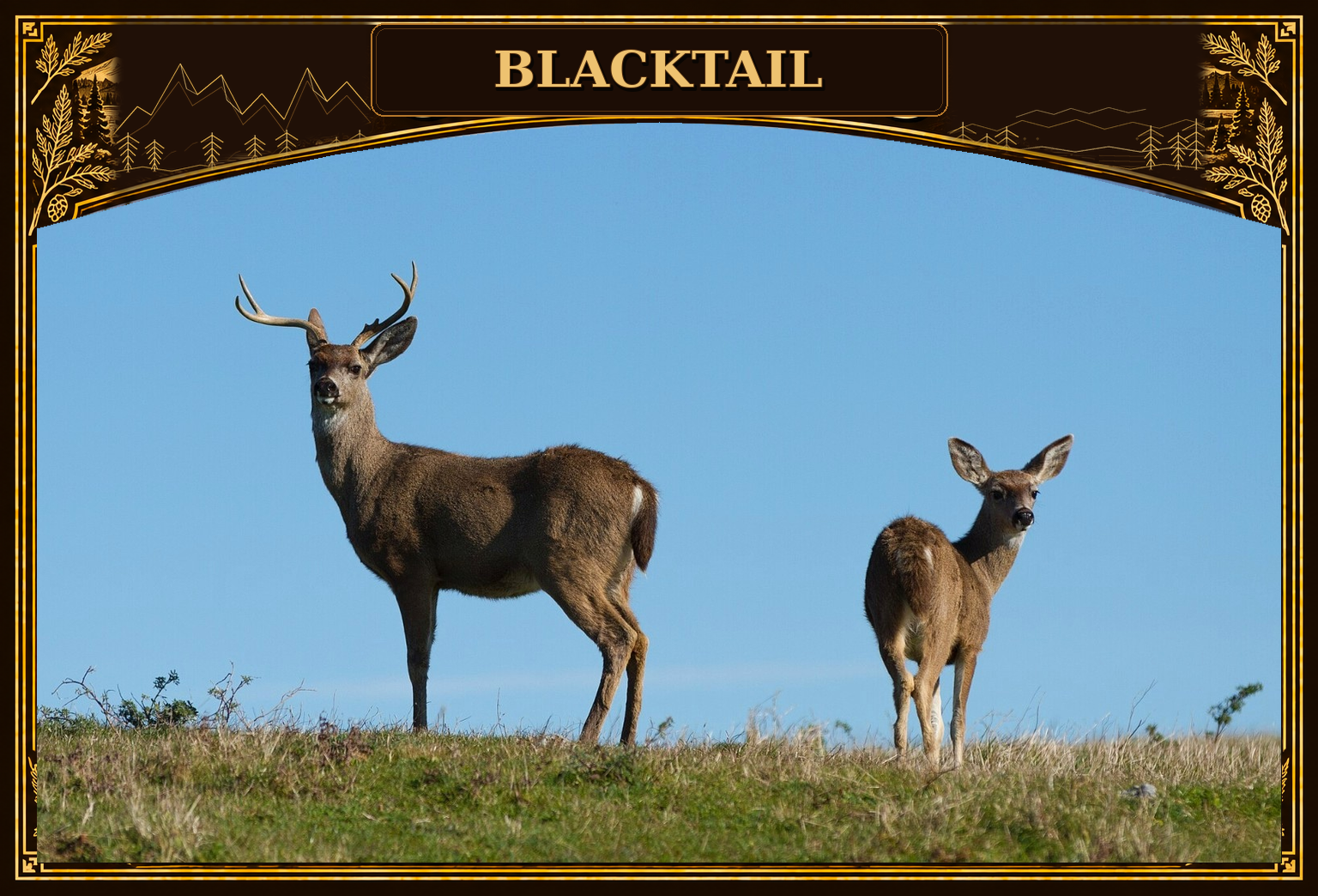
Black-tailed deer occupy coastal and forested western habitat where dense vegetation, logging edges and steep terrain can shape both encounters and recovery.
Identification comes first
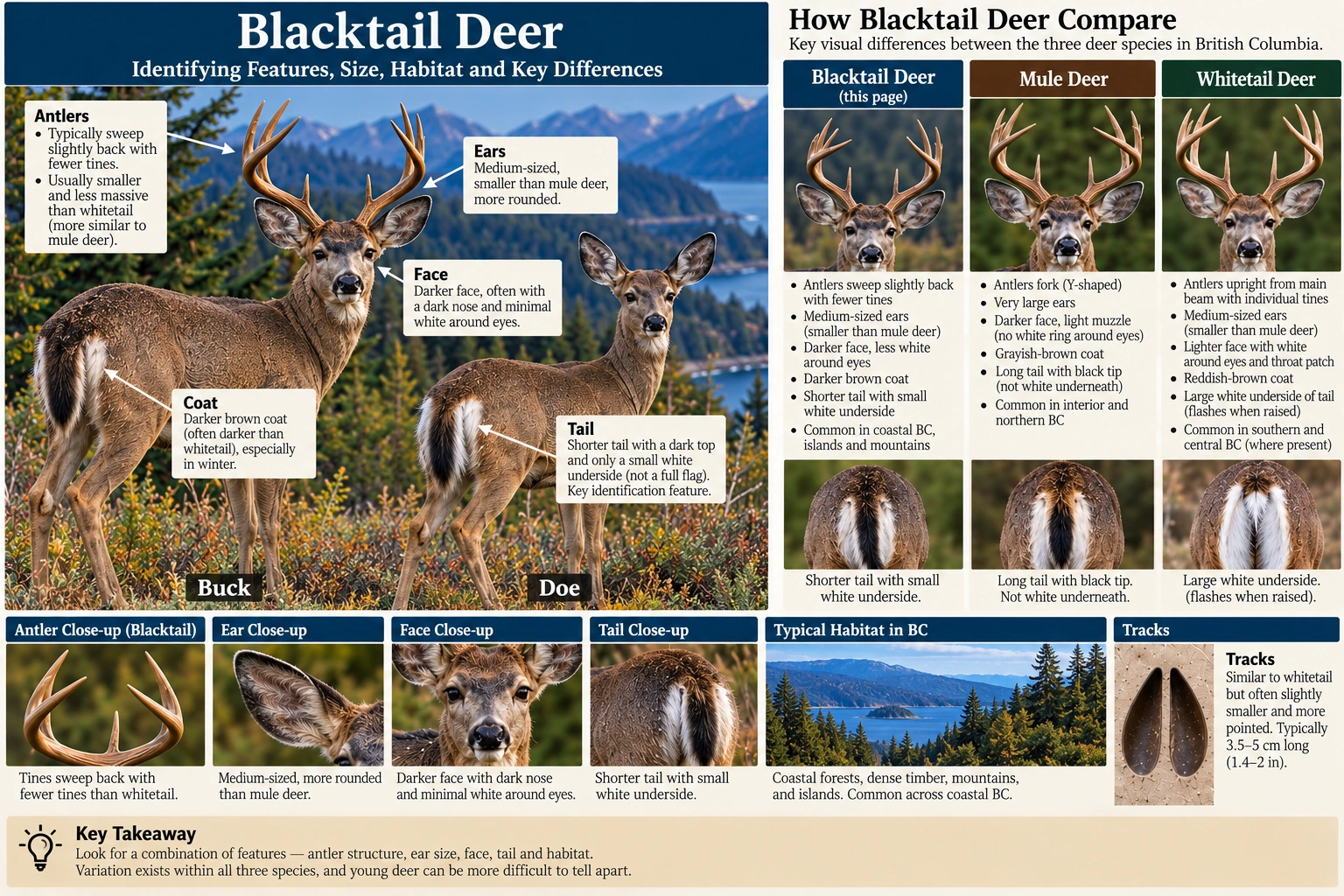
Know the deer populations and current definitions where you hunt. In areas of overlap or hybridization, rely on the regulations and identification guidance for that jurisdiction rather than a casual rule of thumb.
How the habitat changes the hunt
Visibility can be brief. Resist allowing a narrow opening to hurry identification or shot preparation. Wind and quiet movement often matter more than covering ground quickly.
Before the shot
A clear foreground and safe background are essential in timber. Do not assume a bullet will simply pass through brush without consequence.
Recovery and use
Thick vegetation makes careful marking and tracking important. Plan for wet conditions, steep ground and meat protection during the pack-out.
Two coastal forms
British Columbia's coast includes two related black-tailed deer subspecies. Columbian black-tailed deer are generally associated with the south coast, while Sitka black-tailed deer are generally found north of Rivers Inlet. The transition is approximate, and the Coast Mountains include an area of overlap. The Alaska Department of Fish and Game describes Sitka black-tailed deer, in general, as smaller, stockier, and shorter-faced than other black-tailed deer. Treat those as broad population tendencies, not a reliable way to identify an individual deer: body size and apparent proportions vary, and a single photograph or feature cannot confirm the subspecies. Use regional range information and current official wildlife guidance for context. Follow the current hunting regulations for the exact management area; do not use this visual description to determine a legal animal.
Continue learning
This site is free — brand partnerships coming soon.
Sources & Further Reading · General educational information only. Always follow current local hunting regulations and verify ammunition performance with the manufacturer.