
Backcountry & Partner Safety
A hunt can become a backcountry problem through weather, injury, navigation error or simple delay. Safety planning should assume that something ordinary may go wrong rather than depending on everything going right.
 Open full-size image ↗
Tell someone the plan
Where practical, leave a route, destination and expected return information with someone who will notice if you do not return.
Carry navigation and communication deliberately
Maps, GPS devices, phones, satellite communicators and compasses each have strengths and failure modes. Know how to use what you carry and protect enough power for the return.
Dress for the stop, not only the walk
Movement creates heat. Injury, glassing or an unexpected overnight stop removes it. Carry layers and weather protection appropriate to the environment rather than planning only for exertion.
Water and energy affect judgment
Dehydration, hunger and exhaustion can degrade decisions before they feel dramatic. Carry enough capacity and know where resupply is realistically possible.
Partners need a plan
Agree on separation, communication, firearm condition, shooting zones and what happens if someone is overdue. Do not let two people carrying equipment become two independent plans.
Turn around before the emergency
Weather, injury, darkness, lost time or equipment failure may justify ending the hunt early. A preplanned turnaround threshold helps prevent commitment from becoming escalation.
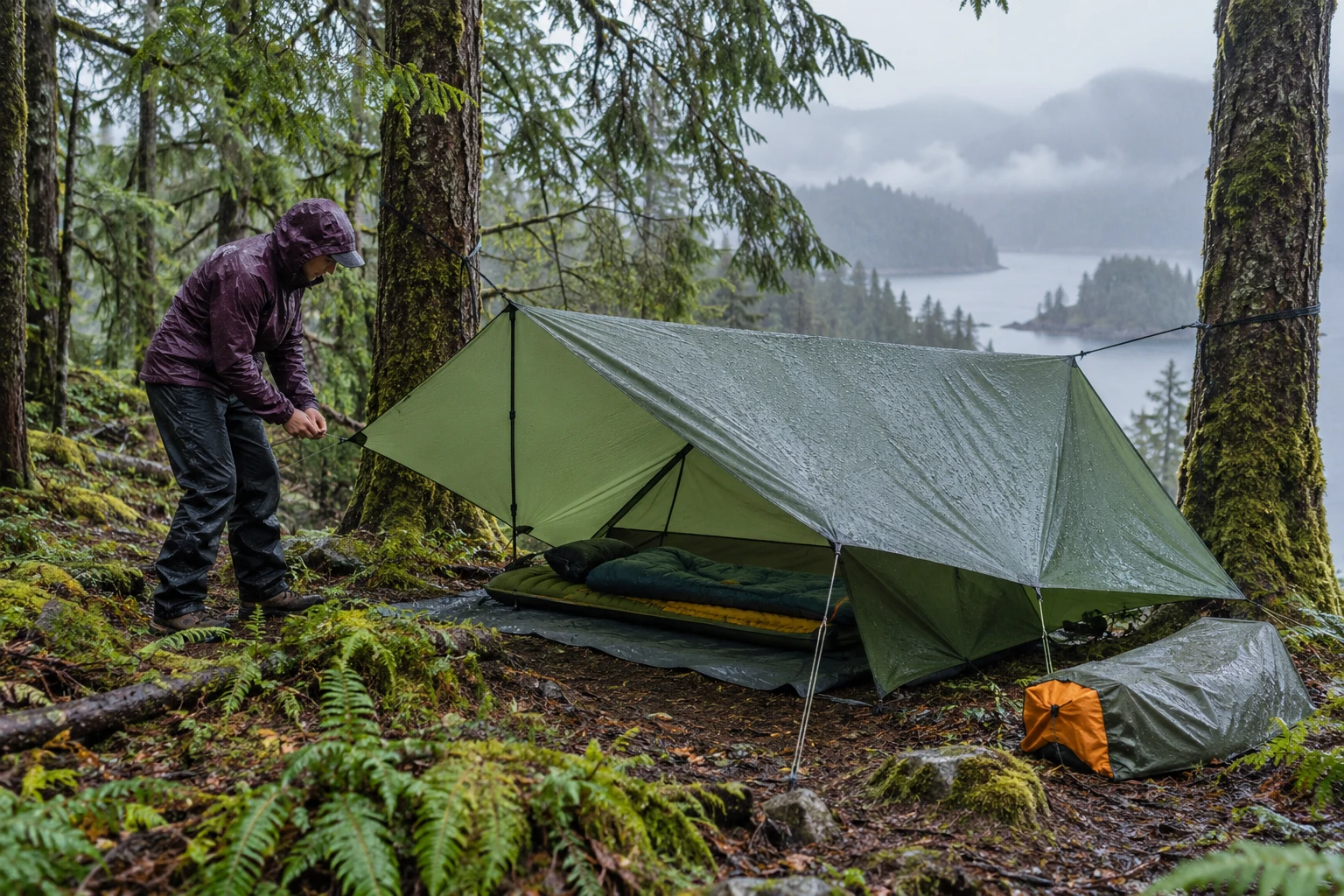
Emergency shelter is a system, not a bushcraft contest
Carry a simple shelter appropriate to the environment, such as a tarp or emergency bivy, plus insulation from the ground. If delayed, prioritize a safe site, wind protection, precipitation protection, ground insulation and ventilation. Improvised natural shelters can take time and energy and should not be the only plan.
Choose the shelter site before building anything
Avoid obvious hazards such as flood channels, avalanche terrain, unstable trees and exposed ridges. Fire may be inappropriate or prohibited, so shelter and clothing should not depend on being able to light one.
Recovery can increase risk
A downed animal can tempt hunters into steep terrain, darkness or overloaded packs. The obligation to recover does not require creating another casualty; slow down, get help and choose a safer method when necessary.
This site is free — brand partnerships coming soon.
General educational information only. Always follow current local hunting regulations and verify ammunition performance with the manufacturer.