
Boating & Watercraft Safety for Hunters
Small boats and canoes can make remote country reachable, but a capsize or unexpected immersion can become life-threatening quickly. This general guide complements, and does not replace, a recognized boating-safety course or the current rules for the waterway.
Field Skills · Prepare and return safely
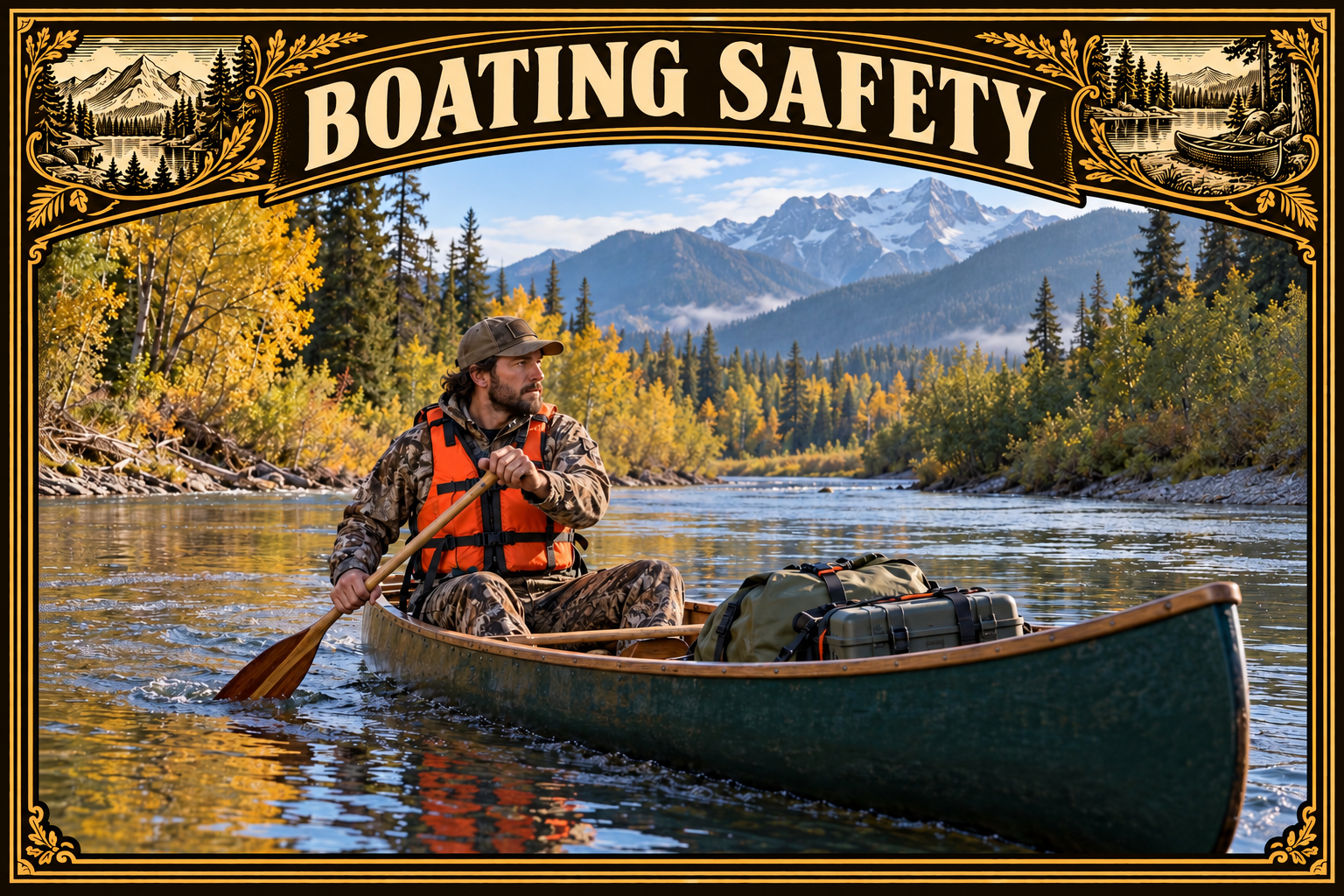
Before launching
Choose a route, vessel, and conditions that fit the least experienced person in the group. Check the marine/weather forecast, water temperature, wind, waves, current, local advisories, closures, and daylight. Turn around or postpone when conditions exceed the group’s skills or the craft’s limits.
- Leave a trip plan and overdue time with a reliable person: route, launch point, intended camps, party members, vehicle description, and what that person should do if you miss check-in.
- Check cell coverage before departure and carry an emergency communication device suitable for the route, such as a marine VHF where monitored, satellite messenger, or registered PLB. Keep it charged, protected from water, and on your person. Learn its actual SOS steps and limitations.
- Requirements for flotation devices, signals, vessel operation, licences, and permits differ by jurisdiction. Every boating user must check with the relevant local law authorities for current requirements. This guide is not a jurisdiction-by-jurisdiction legal or equipment checklist.
- Check whether the waterway permits non-motorized craft, electric propulsion, or power-driven boats, and whether limits apply to engine power, speed, hours, or activities. In Canada, Transport Canada publishes schedules of vessel-operation restrictions; elsewhere, check the official waterway authority.
- Inspect the craft, drain plugs, paddle or oars, propulsion, battery/fuel, navigation lights, anchor, whistle/horn, bailer or pump, and communications before launch. Know how to recover a capsized craft and re-enter only if trained and conditions allow.
Wear the right flotation device
Carry the approved lifejacket or personal flotation device (PFD) required for every person aboard. Read its approval and sizing label. Choose a model that fits the wearer’s weight and chest size as specified, suits the activity and craft, fastens securely, and is in good condition. A lifejacket and a PFD can have different turning and flotation performance.
Wear it. A flotation device stowed in the boat cannot help someone who falls in, and wind, waves, injury, or cold water can make it difficult or impossible to put on once in the water. Wear it while underway and while launching, loading, paddling, fishing, or hunting from a small open craft. Use a highly visible colour where possible. Check children’s fit carefully and keep them within reach under adult supervision.
Cold water can affect breathing, coordination, strength, and the ability to self-rescue. Do not treat swimming ability, proximity to shore, or a calm-looking surface as protection. Consider clothing and immersion protection for the water temperature.
Load and move carefully
Stay within the manufacturer’s capacity and the legal load limit. Distribute people and gear evenly, keep heavy cargo low, secure loose items, and keep emergency equipment reachable. Avoid sudden shifts, standing, reaching over the side, or loading/unloading in a way that tips the craft. Do not tow, overload, or modify a small craft beyond its rated use.
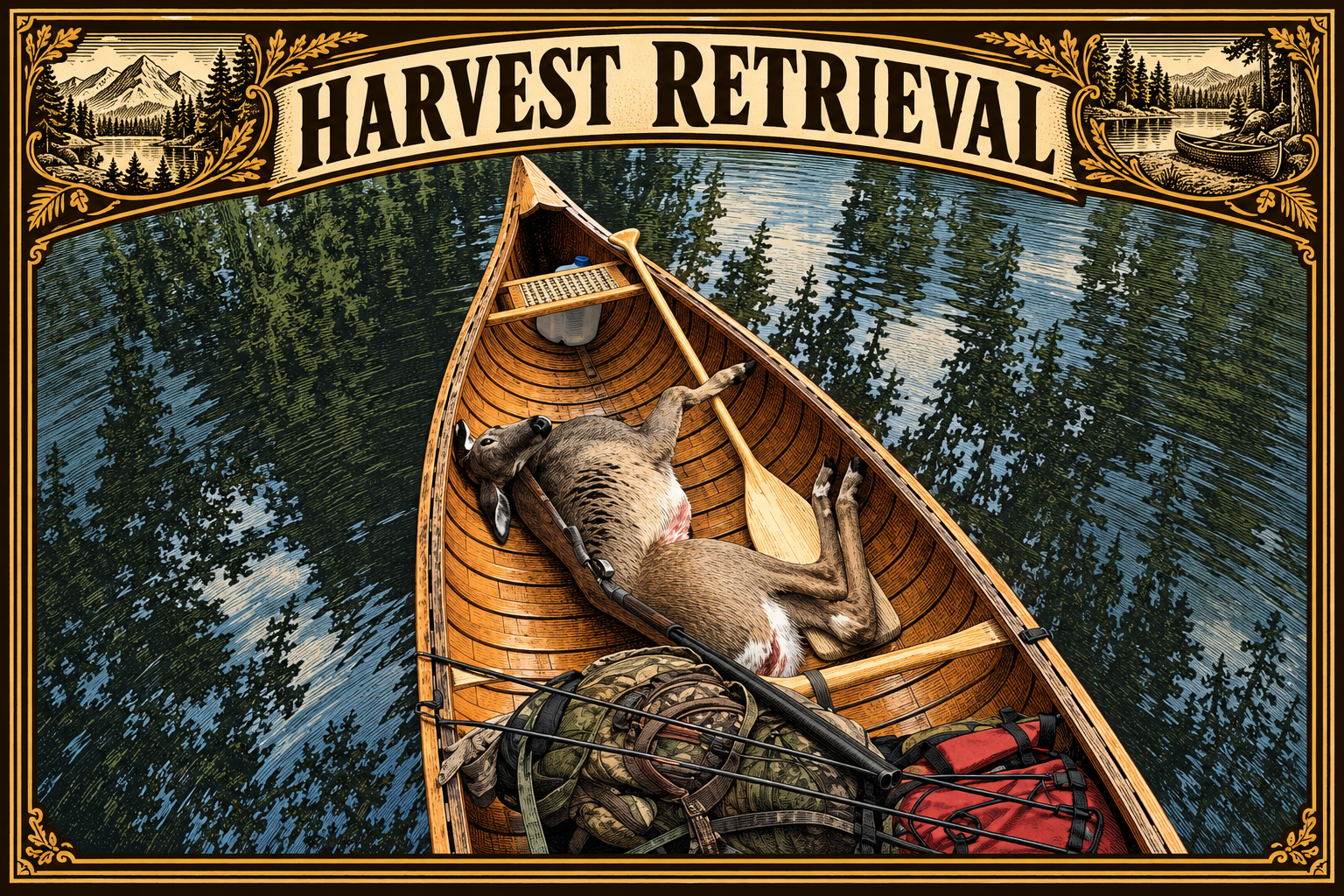
Hunting from or around a boat
Verify the hunting and navigation rules for that exact location, species, season, and vessel. Check separately whether the law controls having a loaded firearm aboard, discharging it from or on a boat, hunting from a moving vessel, or using propulsion while hunting or retrieving wildlife. These rules can depend on province/state, federal species rules, boat type, whether it is moving, and whether a motor is propelling it.
Examples show why one broad rule is unreliable: Canada’s federal migratory-bird regulation generally prohibits hunting migratory game birds from or using a moving motorized or sail boat, with a murre exception and separate treatment of retrieval. U.S. federal migratory-bird rules generally require the motor to be completely off (or sails furled) and the boat’s progress stopped before hunting; a powered craft may still be used for retrieval. Ontario generally restricts loaded firearms aboard and firearm discharge from motorboats in wildlife areas, with defined exceptions; British Columbia’s general prohibition and its 2026 regulation include conditions tied to whether a boat is being propelled by its motor. These are examples, not a complete legal summary.
Secure equipment against sliding or falling overboard. Never handle or discharge a weapon in a way that points it at an occupant, destabilizes the craft, or leaves the target, background, and waterway unsafe. Do not use camouflage that makes people hard for other boaters or rescuers to see; add high-visibility clothing or signals when conditions and rules call for it. Waterfowl hunters can continue with the Waterfowl species guide.
Distress flares and other visual signals
Flares are emergency distress signals for boating; they are not routine signalling toys. The type and number of approved visual distress signals required depends on the vessel, waterway, voyage, and jurisdiction. Where an approved electronic visual distress signal is allowed as an alternative, follow the exact local rule.
If carrying pyrotechnic flares, follow the manufacturer’s instructions, check the expiry date before each season, and replace them before expiry. Keep them dry, intact, accessible and secured against accidental ignition, away from fuel and heat. Use them only for genuine distress. Never test or fire an expired flare for practice, and follow local distributor or hazardous-waste guidance for disposal.
Signal mirror for distant searchers or aircraft
A signal mirror can make a bright flash visible at a distance on a sunny day and may attract a passing boat, ground searcher, or aircraft. It is a backup visual aid that depends on sunlight and line of sight. Practise with the mirror’s sighting instructions before a trip. Do not climb onto exposed or unstable ground to use it. Pair visual signals with a working distress beacon, radio, or satellite device whenever possible.
Field-ready reminders
- Everyone wears a correctly sized, approved flotation device.
- Conditions, vessel capacity, equipment, and operator skills suit the trip.
- People, cargo, and hunting equipment are balanced, low, secured, and visible.
- A trip plan, overdue time, emergency contacts, and working communication method are in place.
- Required signals are approved, accessible, unexpired, and appropriate for the jurisdiction.
- For a capsize, collision, person overboard, or injury, use the practised local emergency plan and summon help promptly. Do not risk another person’s life by attempting an untrained rescue in dangerous water.
Sources for this lesson (12)
- Transport Canada: Choosing lifejackets and personal flotation devices ↗
- Transport Canada: 2026 Safe Boating Guide ↗
- Transport Canada: Boat owner responsibilities and flare disposal ↗
- Transport Canada: Schedules of the Vessel Operation Restriction Regulations (April 2026) ↗
- U.S. Coast Guard: Life jacket wear and fit ↗
- U.S. Coast Guard Boating Safety Division: Federal regulations ↗
- U.S. Government Publishing Office: Signaling for Rescue ↗
- United States: 50 CFR § 20.21 ↗
- Canada: Migratory Birds Regulations, 2022, section 41 ↗
- Ontario: Fish and Wildlife Conservation Act, 1997, section 17 ↗
- B.C. Wildlife Act, section 27 ↗
- B.C. Reg. 66/2026 ↗
See every cited website in Sources & Further Reading. Listing an organization does not imply its endorsement of this guide.
This site is free — brand partnerships coming soon.
Sources & Further Reading · General educational information only. Always follow current local hunting regulations and verify ammunition performance with the manufacturer.