
Planning for Success
A hunt plan should continue past the moment you find an animal. Work backward from recovery, meat care and a safe return rather than treating the shot as the finish line.
Start with the whole outcome
Ask how you will locate the animal after the shot, reach it safely, complete required tagging or validation, field process it appropriately and move the edible portions out before meat quality is compromised.
Let terrain change the plan
A distance that looks modest on a map may involve cliffs, water, deadfall, snow or elevation. Consider not only whether you can get to an animal, but whether you can repeatedly carry loads back out.
Plan for time and temperature
Daylight and weather affect navigation, recovery and meat care. Warm conditions can make cooling urgent; severe weather can turn an ordinary route into a safety problem. Build those realities into the shot decision.
Navigation and communication are systems
Know your route and alternatives, carry an appropriate navigation method, tell someone your plan where practical, and understand where communications may fail. Electronics are useful but should not create confidence without preparation.
Method- and access-specific preparation
Some hunts add their own planning layer. These lessons sit alongside the rifle preparation path rather than interrupting it:
- Backcountry & Partner Safety — the pre-trip pack-and-plan checklist, weather, lightning, sanitation and lost/delayed response.
- Outdoor Wildlife Safety — bears, bear spray, bites, stings, spiders and snakes.
- ATV & Off-Highway Vehicle Use and Boating & Watercraft Safety — motorized and water access.
- Tree Stands & Ground Blinds and Bowhunting & Archery Field Skills — method-specific preparation.
- Land Access, Indigenous Rights & Respectful Hunting — permission and respectful access.
Using game calls
A game call imitates a sound made by the species you are hunting. Learn what that sound communicates and when the animal uses it, rather than simply copying a noise. Treat calling as an optional skill: practise before your trip, use species-specific hunter-education material, and check the current rules for the calling method you intend to use. Calling does not replace scouting, wind awareness, positive identification or a safe shot decision. Never assume that a sound or movement is the intended animal.
Source: Hunter-ed.com game calling guidance ↗Have thresholds for changing the plan
Decide in advance what weather, injury, equipment failure, lost time or fatigue will make you turn around, shorten the hunt or pass an opportunity. Pre-decided limits are easier to respect than improvised ones.
Fire restrictions change with conditions
Wildfire rules and fire bans vary by jurisdiction and change with conditions. Before the trip and again before lighting any fire, check the local fire authority or fire centre and the land manager for current bans and instructions, and follow their directions. This guide does not maintain a jurisdiction-by-jurisdiction directory.
Plan for the animal you hope to harvest
Large animals can require multiple trips and substantial time. Bring the tools and clean breathable meat protection appropriate to the hunt, and understand local requirements before deciding how you will process and transport the harvest.
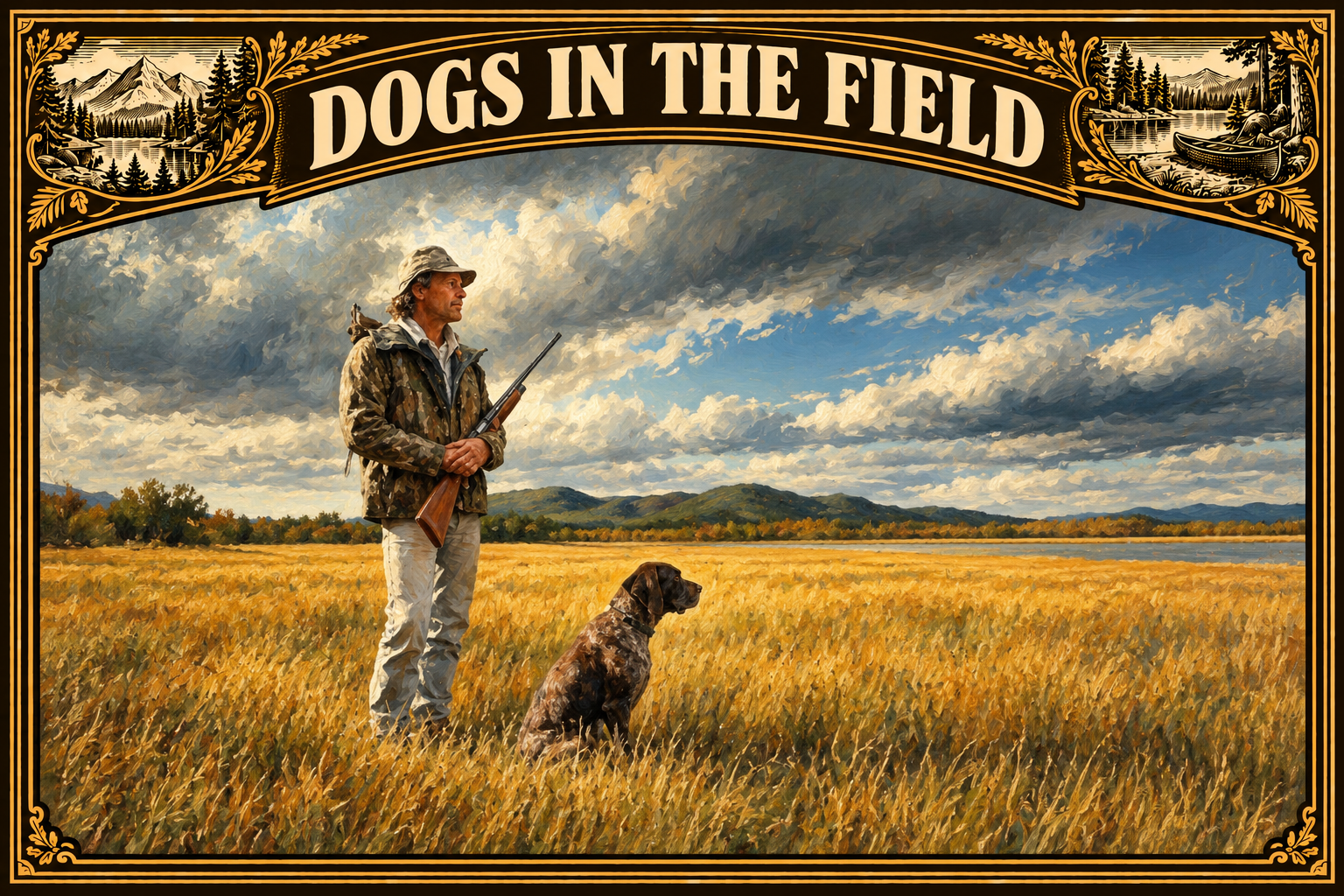
Planning a hunt with a dog
A dog can be a companion, a retriever or, where permitted, a working partner in tracking wounded game. Dog use is regulated separately from the hunter’s own licence. Rules can differ by species, activity, season, area and land manager — for example, B.C. distinguishes supervised game-bird pursuit from leash or direct-control conditions for listed big game; Ontario conditions dog use by species, licence, season/area and has separate wounded-game tracking rules; and Florida FWC discusses retrievers for downed waterfowl while separately requiring registration for certain deer/bear dog use on private property. These examples show why you must check the exact species, activity, season, area and land rules before the hunt.
Plan control and visibility: keep the dog under the level of control local rules and conditions require, consider a visible vest, and agree with partners on safe shooting zones that account for where the dog will be. Plan water, injury care and an evacuation option for the dog as well as people.
Dogs can attract or provoke wildlife encounters and can carry ticks home. Read Outdoor Wildlife Safety for bear-country precautions and Tick Awareness for pet tick checks. Anyone considering feeding animal tissues to a dog should check current wildlife-health guidance and a veterinarian.
Success includes coming home safely
Finding no animal, passing a poor shot or ending early can still represent a well-executed plan. The hunt is not made unsuccessful simply because no trigger was pulled.
Women and girls in hunting and outdoor life
Women and girls are hunters, anglers, conservationists, outdoor learners, leaders, and mentors. Their participation is an ordinary and valued part of outdoor life, from first lessons through advanced practice. Interests, bodies, experience, budgets, cultural backgrounds and preferred learning settings differ. This brief general overview is informed by cited sources; experiences and viewpoints vary, and it does not speak for all women.
Potential barriers are practical conditions that people and programs can address: gear fit and access, cost, access to places, peer and mentor support, underrepresentation and family-trip planning. Experiences vary, and not every woman encounters each barrier. These are not measures of ability or reasons anyone should have to prove they belong.
The U.S. Forest Service research on women hunters’ decision-making ↗ discusses gear, household tradeoffs, hunting partners, land access and preparation. USGS research on adult outdoor-education programs ↗ describes participant-valued instruction, supportive environments and practical event logistics. These studies concern particular participants and settings, not every woman’s experience.
Indigenous Women Outdoors’ Introduction to Hunting Series ↗ is an Indigenous-led example of supportive hunting and food-sovereignty instruction. It is one example, not a claim to represent all Indigenous women or all communities.
- Offer well-fitting clothing, equipment and protective gear; explain choices without gender stereotypes, and provide gear lending where practical.
- Provide respectful, hands-on instruction and optional mentorship or peer support. Give participants’ questions and field knowledge the same serious attention.
- Plan privacy, sanitation and safe facilities; set clear conduct expectations and explain how to report harassment or unsafe behaviour.
- Make costs clear, choose accessible locations and consider family-friendly timing and trip arrangements.
This site is free — brand partnerships coming soon.
Sources & Further Reading · General educational information only. Always follow current local hunting regulations and verify ammunition performance with the manufacturer.