
Waterfowl
Species guide · Bird — educational
 Open full-size image ↗
Know the animal and habitat
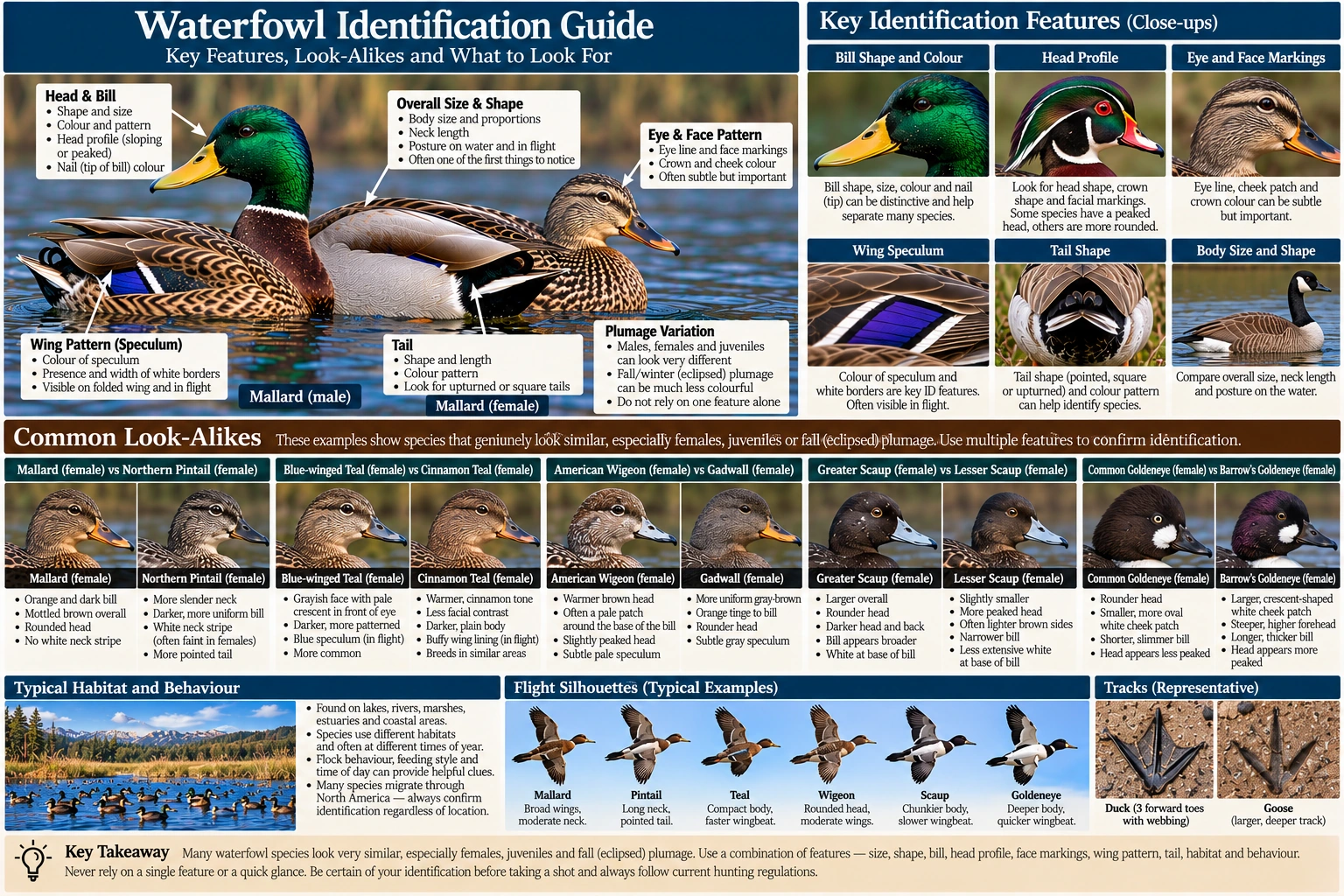
Waterfowl use wetlands, rivers, lakes, agricultural areas and coasts along migration routes. Species and local abundance can change rapidly through a season.
Identification comes first
Species identification can be difficult in flight. Learn shape, size, plumage, voice and flight characteristics before hunting, and know current limits and protected species.
How the habitat changes the hunt
Water, boats, dogs, cold weather and other hunters add safety considerations. Plan retrieval before firing and do not create a shot you cannot reasonably recover.
Before the shot
Waterfowl hunting has jurisdiction-specific ammunition requirements, including non-toxic shot rules in many contexts. Verify current official rules. The rifle-focused finder is not the tool for selecting waterfowl loads.
Recovery and use
Retrieval is part of the shot decision. Consider current, wind, ice, water temperature and the safe limits of people, dogs and boats before an opportunity appears.
Continue learning
This site is free — brand partnerships coming soon.
General educational information only. Always follow current local hunting regulations and verify ammunition performance with the manufacturer.