
Don’t Forget to Enjoy the Hunt
A closing chapter on noticing the land, the season and the people you share it with.
Hunting can mean long stretches of walking, watching, waiting, and coming home without an animal. Those hours still count. Every outing gives you a chance to learn a place and to enjoy being in it.
Every so often, pause. Take a breath and look beyond the next trail or opening. Notice how the forest changes as the ground rises, the soil changes, or the trees give way to a different mix of species. Watch how a small brook joins another and becomes a stream, then a river. Look for flowers, changing leaf colours, ripening seeds and cones, frost, and the shifting quality of light as the season moves on. Listen and look for birds arriving, departing, gathering, or moving through on migration. These signs vary by place, but together they can help you notice the season unfolding around you.
These details can make you more attentive to the land. A change in vegetation may show where one habitat begins to blend into another. A track, rub, scrape, or fresh browse mark may make more sense when you notice the surrounding cover, water, wind, and time of year. Keep these observations as clues, not promises: no single sign tells you exactly where an animal will be or what it will do.
Cold mornings, frost, valley mist, and changing plants can help you notice that the season is turning. They are part of the conditions you are learning to read, but they do not by themselves predict animal movement or the start of the rut. Weather and wildlife behaviour vary from day to day and place to place.
You do not have to make every moment productive. Some days the most valuable thing you bring home is a clearer sense of the place, a new detail you had never noticed, or simply the memory of being outdoors. A successful hunt is not measured only by what is harvested. Patience, respect for wildlife, care for the land, and enjoyment of the experience matter too.
Take a moment: What changed around you today? What did you notice that you might have missed if you had kept moving?
Wonder is worth passing on
The time you take to watch, listen, and learn can grow into a deep sense of wonder. It can make you look forward to getting outside for its own sake—even on a day when bringing home an animal is not the point.
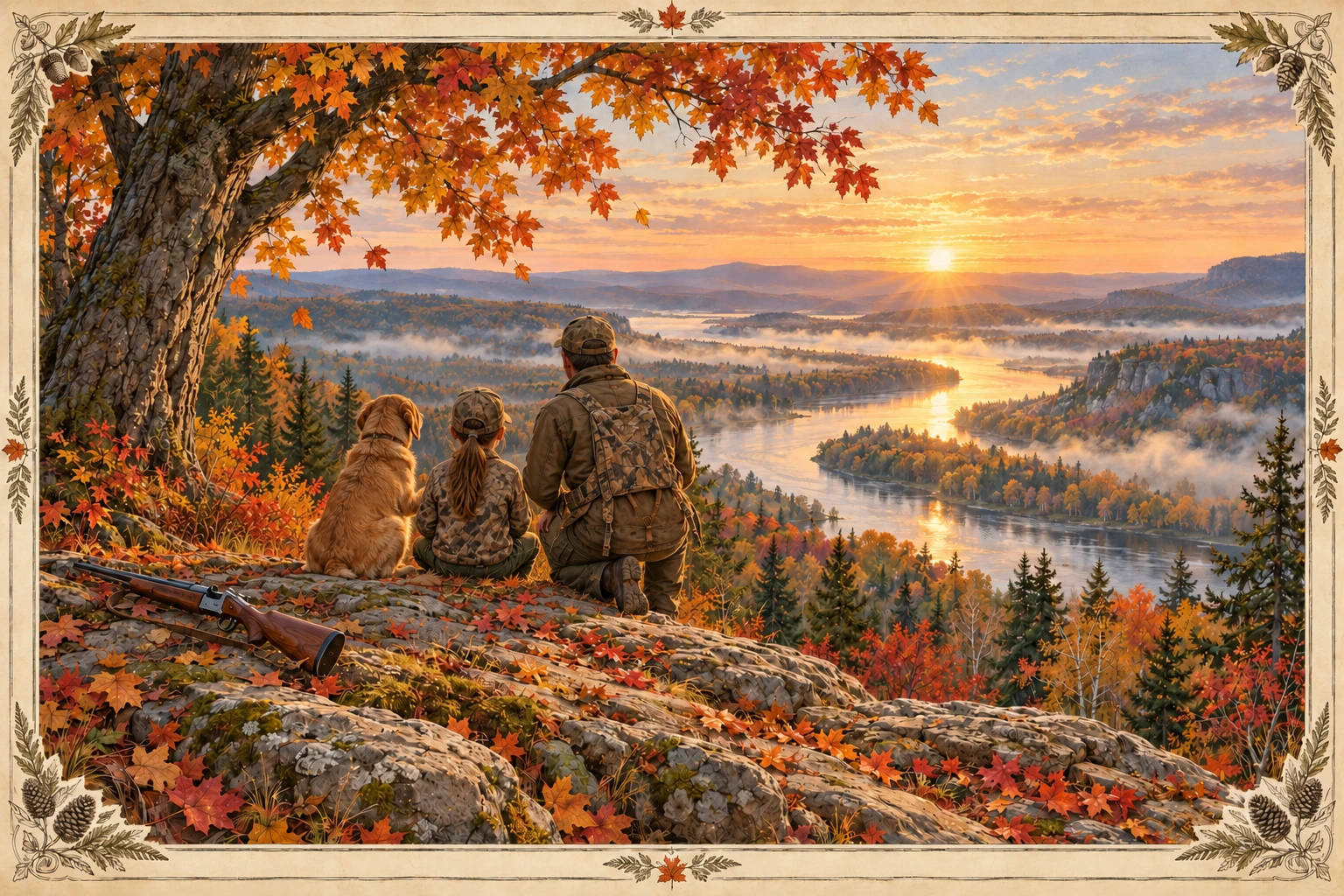
Share that wonder with the next generation. Show a young person the changing leaves, seeds and cones, migrating birds, tracks, and the way a small brook joins a larger stream. Let them ask questions, notice things for themselves, and build their own connection with the outdoors. The lessons we pass along can help grow curiosity into care—and care into a lasting commitment to protect wild places and the life they support.
Hunting is sometimes viewed with suspicion, and it deserves honest reflection. When it is legal, ethical, and grounded in respect for wildlife, responsible decision-making, and meaningful use of the animal, hunting can be one way to deepen that relationship with the natural world. At its best, it asks us to pay attention, accept responsibility, and leave a legacy of care for the land and the generations who will follow.
So pay attention out there. Pack out what you pack in. Be safe. Most of all, enjoy the slow pace of being in nature. A hunting day can invite the kind of close, patient attention that helps you notice and learn from the wild around you—and carry that sense of wonder with you long after the day ends.
This site is free — brand partnerships coming soon.
Sources & Further Reading · General educational information only. Always follow current local hunting regulations and verify ammunition performance with the manufacturer.