
Wild Mushrooms: Learning, Look-Alikes, and Safe Limits
This first-pass guidance covers British Columbia and the coastal Pacific Northwest only. It is an introduction, not an edible-mushroom identification key. It cannot identify a specimen or establish that any mushroom is safe to eat. Species and look-alikes vary by region, and some poisonous mushrooms resemble edible ones. If you are uncertain about a wild mushroom, do not eat it. A plate, field guide, app, online answer, or photograph alone is not enough to confirm edibility. Anyone wanting to begin picking should purchase an authoritative field guide for their region and follow its identification, collection, and safety recommendations.
Optional learning · Enjoy the Hunt
Learn the features; do not eat from a picture
Check several features on the whole specimen, including the underside, stem and base, habitat, and season. Do not taste a mushroom as an identification test. Do not rely on a phone app or a single photograph to decide that it is edible. A mismatch, missing feature, or uncertain identification means leave it alone. Learn from a qualified local identifier when the guide or local authorities recommend it.
Before collecting, identify the land manager and confirm current collection rules, access permission, closures, and any local limits. B.C. mushroom-picking guidance and BC Parks rules are starting points for B.C.; they do not establish permission on private, leased, First Nations, Tribal, or other managed lands. Ask the relevant landholder or Nation where required, respect local protocols, and do not publish sensitive gathering locations.
If someone may have eaten a poisonous mushroom, contact the local poison centre or emergency service immediately and follow its directions. Do not wait for symptoms or try a home remedy. BCCDC’s death-cap guidance advises immediate emergency care for suspected ingestion and says to bring a specimen and location information when possible. Recheck current regional contact details at publication time.
The accepted teaching plates
These Victorian plates are educational illustrations, not specimen-identification tests, edible verdicts, or permission to collect.
Pacific golden chanterelle group
The plate highlights branching, blunt ridges beneath the cap that run toward the stem. Observe multiple features and local look-alikes; this feature alone is not an identification.
.png)
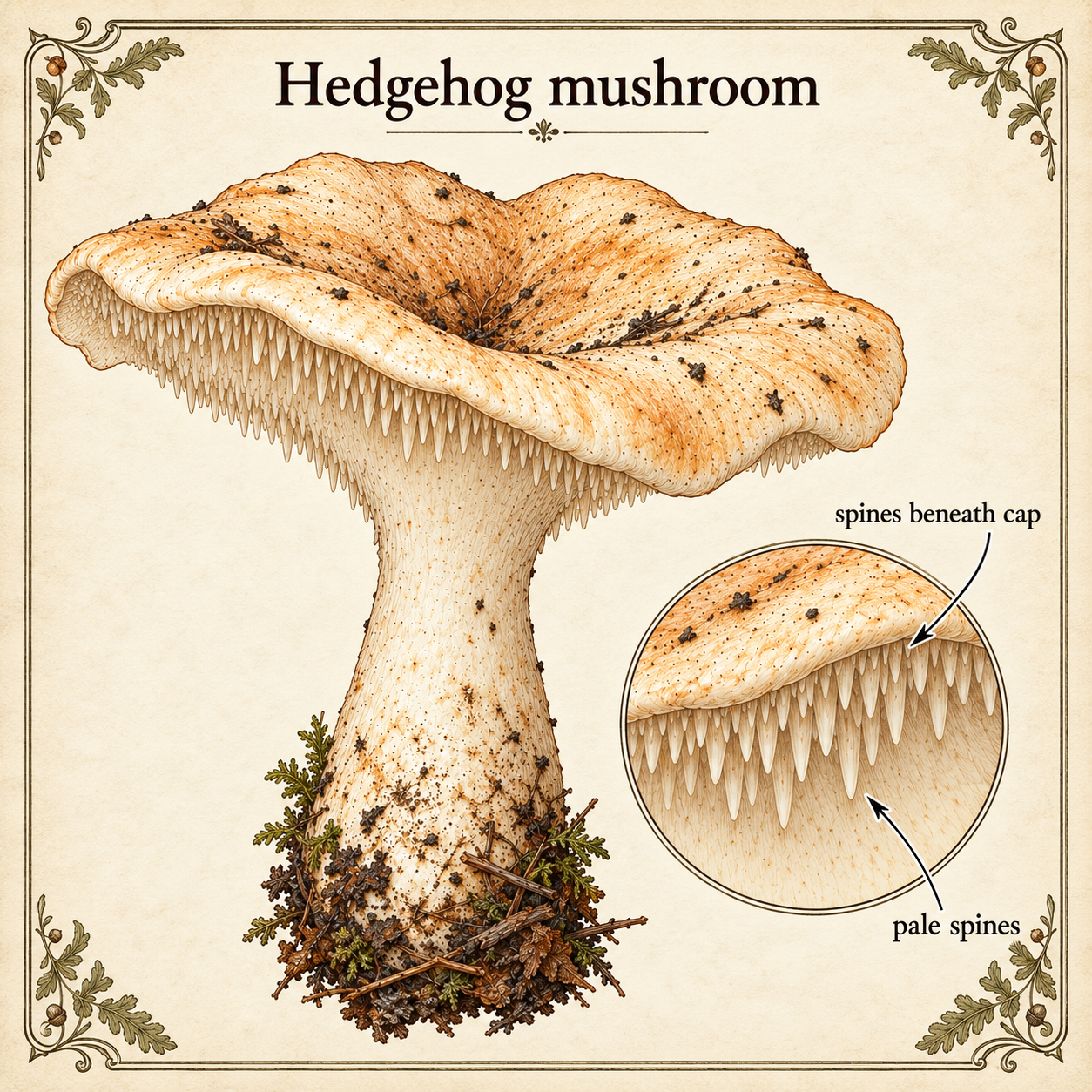
American hedgehog group
The plate highlights pale spines beneath the cap. Other toothed fungi exist; this feature alone does not identify a specimen.
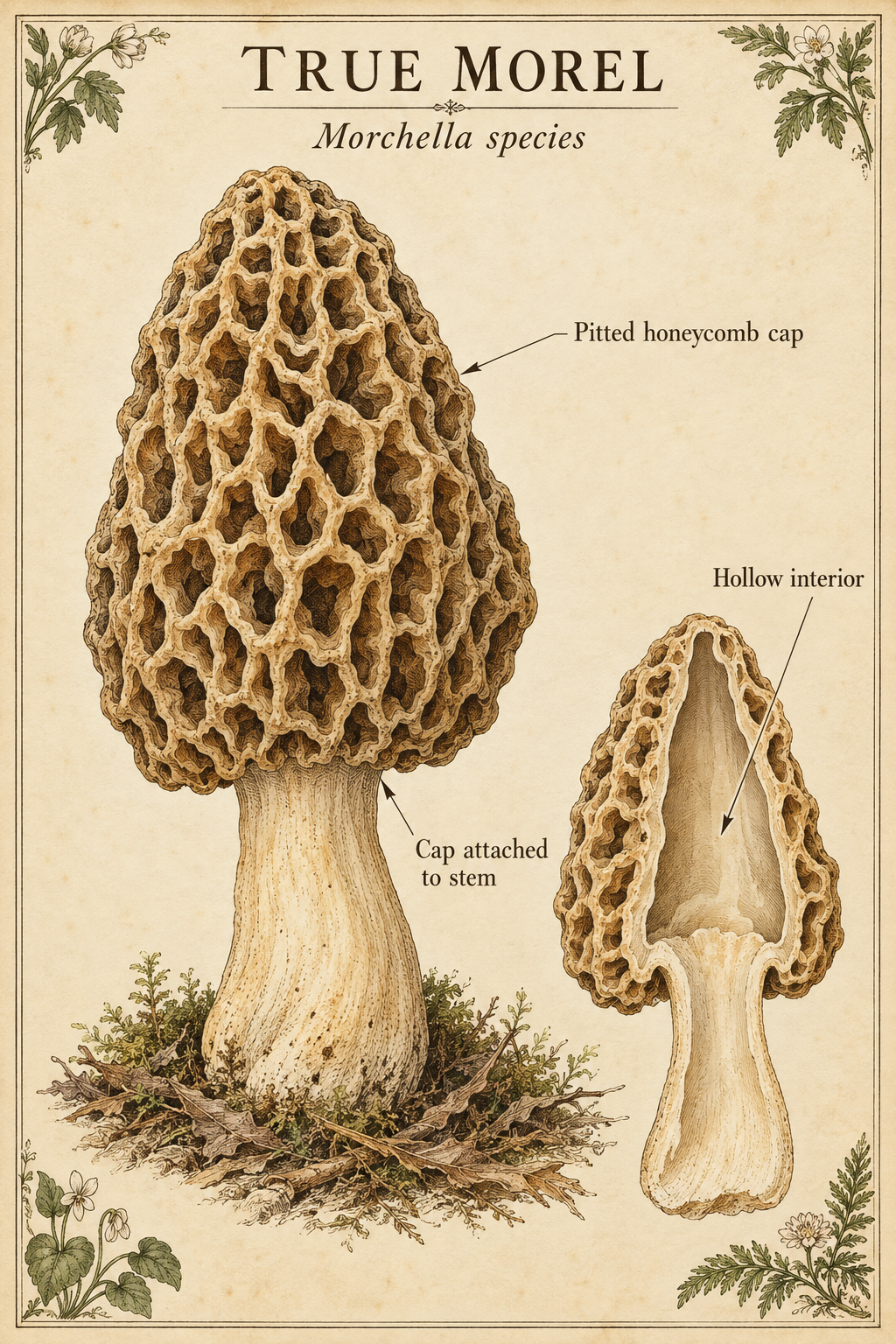
True morel group
The plate shows a pitted cap, cap-to-stem attachment, and a longitudinal hollow interior. False morels and other look-alikes require careful regional learning; no single feature establishes identity or safety.
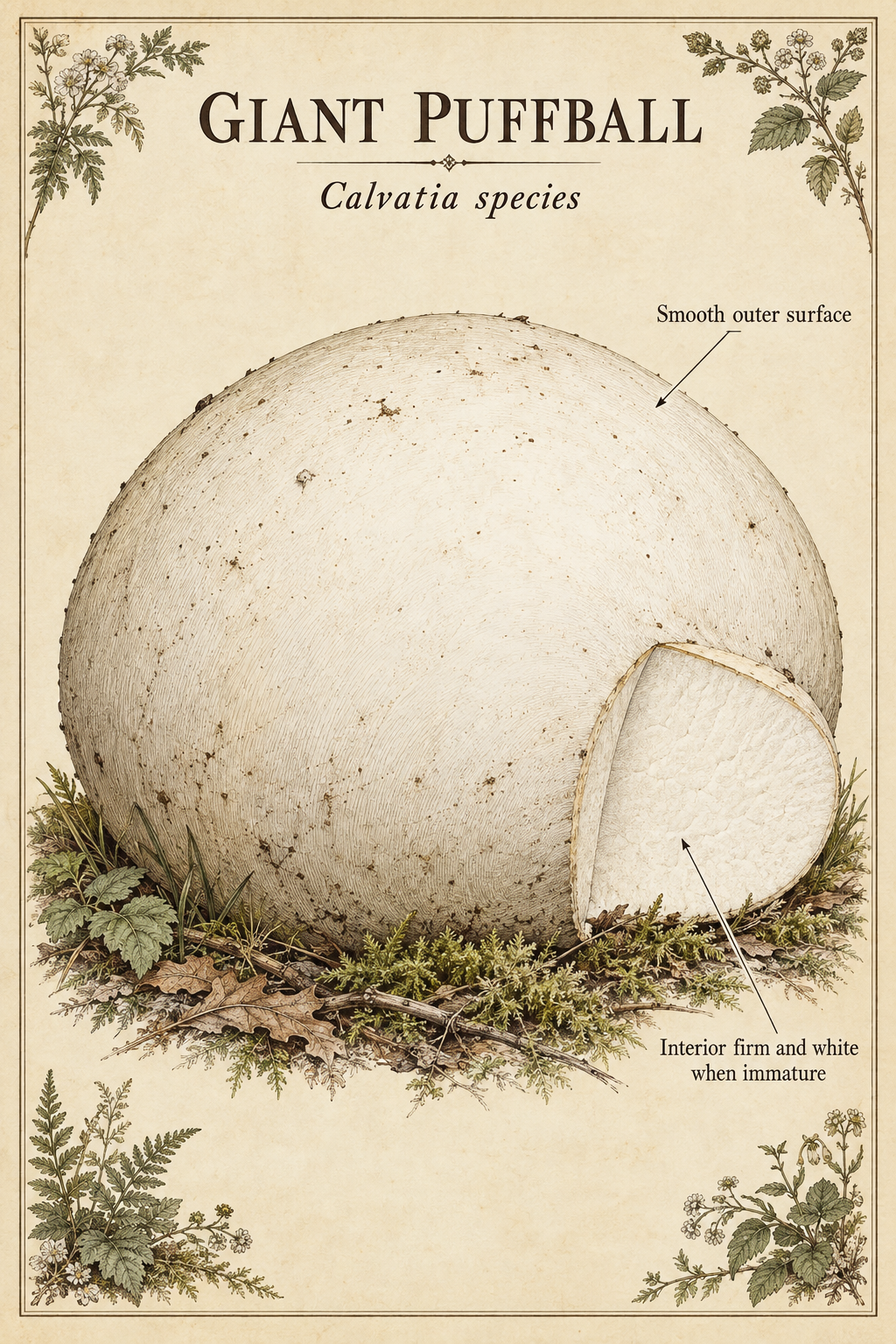
Giant puffball
The plate shows no distinct cap or stem and a cutaway with a firm white interior in a young specimen. Young Amanita buttons can resemble puffballs from the outside. The cutaway is essential, but the plate still cannot establish edibility.
King bolete group
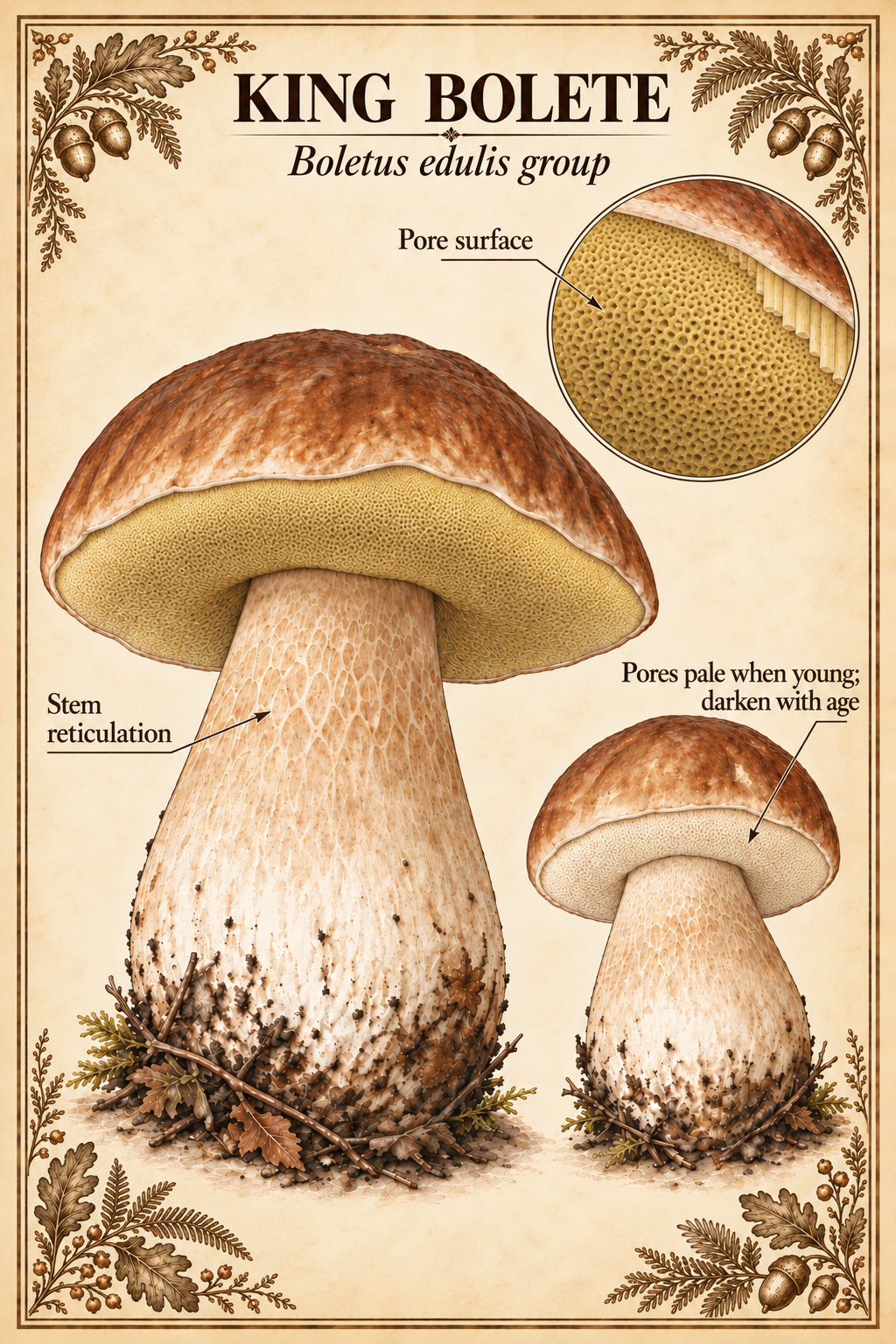
Do not present the plates as an identification test. Follow an authoritative field guide written for the region, including any recommendations to consult local experts.
Regional source links
- B.C. Government — Mushroom picking on Crown land ↗
- B.C. Centre for Disease Control — Wild mushrooms may be poisonous ↗
- B.C. Centre for Disease Control — Death cap mushrooms ↗
- UBC Beaty Biodiversity Museum — Mushrooms Up! Morels ↗
- UBC Beaty Biodiversity Museum — False morel ↗
- UBC Beaty Biodiversity Museum — American hedgehog ↗
- UBC Beaty Biodiversity Museum — Chanterelle look-alikes ↗
- Cornell Mushroom Blog — Giant puffballs ↗
- Iowa State University Extension — Puffballs and similar-looking young Amanita ↗
- Penn State Extension — Giant puffballs ↗
- B.C. Parks — Confirm rules for the specific park or protected area ↗
- Vancouver Mycological Society — Poisonous mushrooms ↗
This chapter remains a general introduction, not an edible-identification key. Plant-tea and salve content are outside its scope.
This site is free — brand partnerships coming soon.
Sources & Further Reading · General educational information only. Always follow current local hunting regulations and verify ammunition performance with the manufacturer.