
Tick Removal
A practical guide for removing an attached tick and what to watch for afterwards.
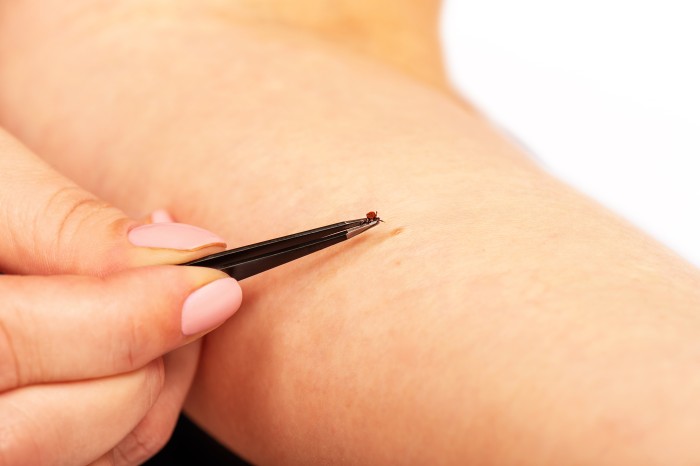
Remove a tick promptly
If you find a tick attached to your skin, remove it as soon as you can. Do not delay removal while waiting to see a healthcare provider.
1. Grasp close to the skin
Use clean, fine-tipped tweezers. Grasp the tick as close to the skin as possible, without squeezing its body.
2. Pull steadily
Pull straight away from the skin with steady, even pressure. Do not twist or jerk.
3. Clean up and check again
Clean the bite area and your hands with soap and water, rubbing alcohol, or hand sanitizer. Check your body for any other attached ticks.
If the mouthparts remain
If mouthparts break off and remain in the skin, try to lift them out with tweezers. If they do not come out easily, leave them alone and let the skin heal; avoid digging into the skin.
Dispose of the tick safely
Place it in a sealed container, wrap it tightly in tape, flush it down the toilet, or put it in alcohol. Do not crush a tick with your fingers. If you want help identifying it, take a clear photo and note where and when it was found. Identification does not show whether that tick carried an infection.
Avoid these removal methods
Do not use heat, petroleum jelly, nail polish, or other substances to make a tick detach. Remove it mechanically with tweezers.
After a tick bite
Watch for a rash or fever in the days or weeks after a bite. If either develops, contact a healthcare professional and mention the tick bite, when it happened, and where the tick was likely picked up. Follow the advice of your local health authority.
Sources
- U.S. Centers for Disease Control and Prevention, What to Do After a Tick Bite (June 9, 2026)
- Public Health Agency of Canada, How to remove a tick (page details July 29, 2025)
- CDC Public Health Image Library, Removing a tick from skin, PHIL ID 31571 (2025)
This site is free — brand partnerships coming soon.
Sources & Further Reading · General educational information only. Always follow current local hunting regulations and verify ammunition performance with the manufacturer.